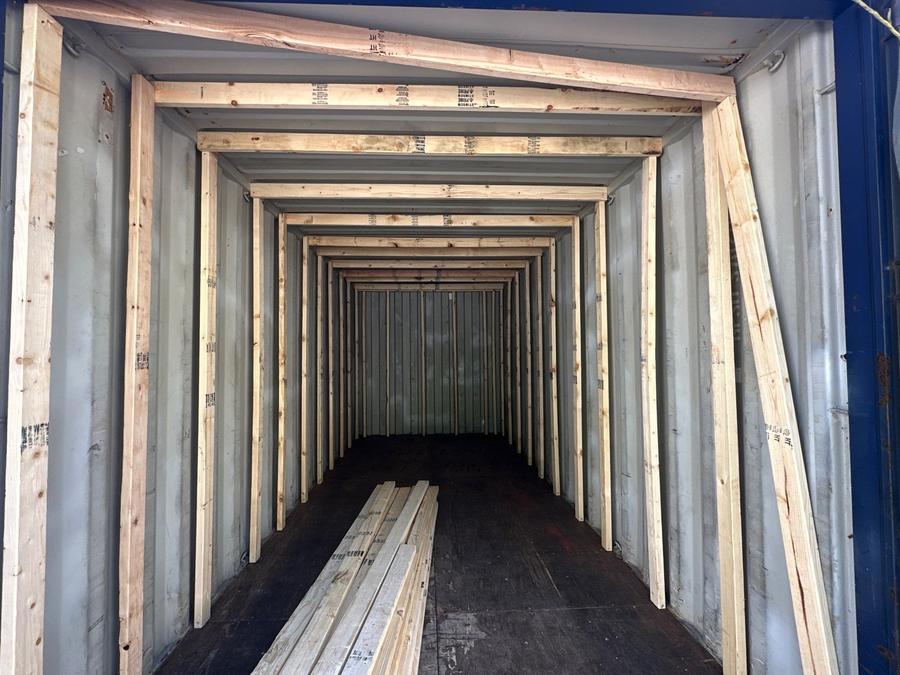
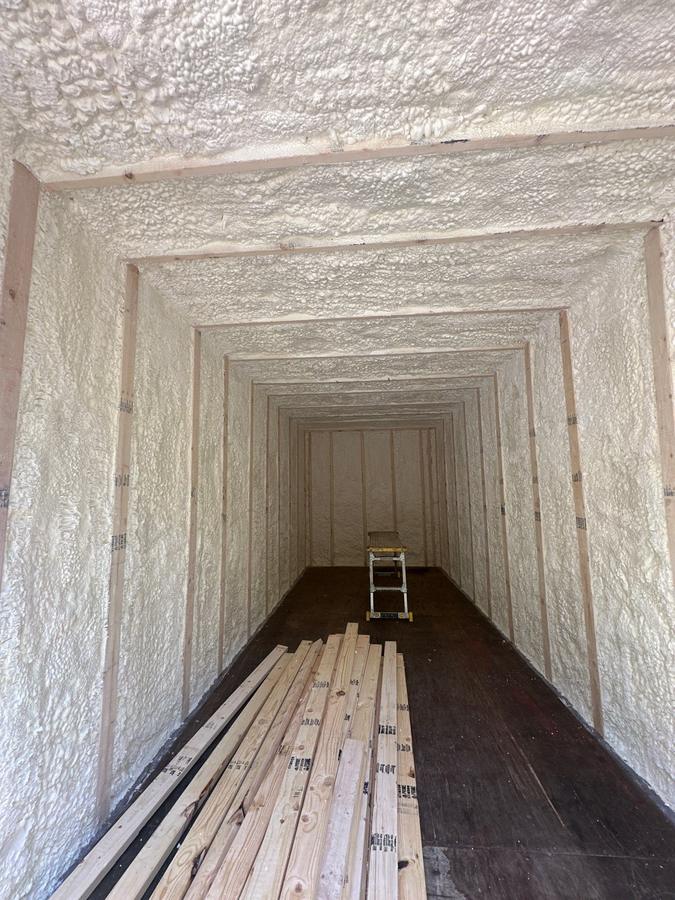
Clarkstown is the purest 1960s–70s subdivision town in Rockland County. Of its 30,256 housing units, 44.3% went up in those two decades, 80.9% are owner-occupied, 69.0% are detached houses, and only 6.1% were built since 2000. Nobody here tells us the house is new.
So the typical Clarkstown job is not fixing a house that was never insulated. It is bringing a house that was insulated once, around 1968, up to what the number should be now, and sealing the things the 1968 crew never sealed. This page is for the owner of that house in New City, Congers, Valley Cottage, West Nyack or Bardonia. Nanuet has its own page.
The houses we insulate in Clarkstown
The median Clarkstown home was built in 1970. Pre-1940 stock is 8.6%, 19.0% dates from the 1940s–50s, 44.3% from the 1960s–70s and 22.0% from the 1980s–90s; 71.9% predates 1980. Two- to four-family buildings hold 9.0% of units and buildings of twenty or more hold 4.3%. There are 117 mobile homes, nearly all of them in Nanuet. Gas heats 84.5% of the town.
New City has been the county seat since 1798 and stayed rural until the 1950s, when the Tappan Zee Bridge (15 December 1955) and the Palisades Interstate Parkway (Rockland section completed 28 August 1958) opened the town to commuters, and Lake DeForest, created in 1956 by the Hackensack and Spring Valley water companies, filled the valley between New City, Congers and Valley Cottage. The New City that resulted has 10,957 units, a median of 1968, 93.8% owner-occupancy, 86.5% detached houses, 53.2% built in the 1960s–70s and 2.9% since 2000, with gas at 90.7%: the streets off South Mountain Road below High Tor, around Lake Lucille and Dellwood Park, and by the Paramount Country Club on Adolph Zukor’s 1918 estate. Bardonia is the same house at higher concentration, 60.5% 1960s–70s and 1.9% pre-1940.
The house is a ranch, a split-level or a colonial that got a few inches of loose-fill in the attic and thin batts in the walls when it was built and has not been opened since. The loose-fill has settled and the eaves are wind-washed where the soffit vents blow through it. The chimney chase is open from the basement to the roof. The plumbing stack, the bath fans, the dropped kitchen soffit and the hatch are holes in the ceiling plane, and the recessed lights that went in over the decades were not built for contact with insulation. In the split the cantilevered floor and the bedroom over the garage have joist bays open at the ends, and those are the rooms the family stopped using in January. None of it is broken. The standard moved.
Congers (2,757 units; 75.5% detached, 13.2% attached, 14.4% pre-1940, 29.1% 1980s–90s) sits within and between four lakes — Congers Lake, Rockland Lake, Swartwout Lake and Lake DeForest — beside Rockland Lake State Park, where the Knickerbocker Ice Company once cut ice for New York City. Its 1980s–90s share is the townhouse rows: party-wall cavities that open into a shared attic, unbalanced attic ventilation, end-unit exposure, and an association that owns the roof, so the job there is a board scope for the common attic plus unit-by-unit sealing. Valley Cottage (3,445 units; 63.1% detached, 18.8% in two- to four-family and 13.3% in five- to nineteen-unit buildings, 48.2% 1960s–70s) is the one Clarkstown hamlet with a real rental and small-multifamily stock, and 18.7% of it heats with electricity, which makes air sealing the first dollar there.
West Nyack’s capes and the lake edges
West Nyack is old Clarksville, around the 1750–51 Clarkstown Reformed Church and, since March 1998, the 2.2-million-square-foot Palisades Center. It is the county’s cape pocket: median 1958, 98.7% owner-occupied, 92.7% detached, 49.1% built in the 1940s–50s. New City has a 1940s–50s quarter of its own, 23.3%. The cape and the story-and-a-half fail the same way everywhere: knee walls with no air barrier on the back side, so the floor joist bays run open from the living space into the eave, and two-by-six roof slopes with no baffles, so any batt in the slope blocks the vent path or gets wind-washed. The fix is to block the joist bays under the knee wall, put an air barrier on the attic side of it, baffle the slopes, and then insulate.
The lake edges are the other second stock: shallow-foundation cottages at Rockland Lake, Congers Lake and Lake Lucille and on the Hudson shore below Hook Mountain, built for summer and lived in year-round. The loss there is through the floor over a crawl or a shallow foundation, and the right work is closed cell foam to the subfloor and a sealed rim, before anyone talks about walls. The sandstone houses — the Jacob Blauvelt House and the Blauvelt–Cropsey Farm are the listed ones — follow a different rule: we do not drill a stone wall. Attic, basement and retrofit assemblies only.
We seal before we insulate
Insulation slows heat moving through a surface. It does nothing about air moving through a gap. Pile more cellulose onto a New City attic with an open chimney chase and you have an open chase with more cellulose around it.
In a Clarkstown split the sequence is: cap the hatch and the dropped soffit with a rigid air barrier, seal the chimney chase with sheet metal and fire-rated sealant, seal the plumbing stack and the wire penetrations, vent the bath fans outside instead of into the attic, seal or replace the recessed cans, foam the top plates, then block the open ends of the cantilever and the garage-ceiling joist bays. Then the added depth performs. The rim joist gets sealed and insulated in the same visit.
If a quote specifies a depth of insulation and never mentions air sealing, it is half a job.
What insulation costs in Clarkstown
Most of our projects run between $3,500 and $12,500. In this stock what moves the number is the attic area and how many penetrations and recessed cans there are to seal, whether the split has a cantilever and a bedroom over the garage, and whether the old loose-fill can stay under the new depth or has to come out. A cape adds knee walls and slopes; a townhouse depends on what the association owns.
Open cell foam runs R-3.9 to R-4.2 per inch. Closed cell runs R-6.9 to R-7.1 per inch and also acts as a vapor retarder, which is why it costs more and why it is right in some assemblies and unnecessary in others. All products are manufactured in the United States and meet applicable building code and safety standards. ENERGY STAR says sealing air leaks and adding insulation can save up to 10% on annual energy bills.
Insulation rebates in Clarkstown
Clarkstown is Orange & Rockland territory for both electric and gas, like all of Rockland County, and 84.5% of Clarkstown units heat with gas. O&R has no insulation or air-sealing rebate of its own; its weatherization page sends homeowners to NYSERDA. The town’s own Clean Energy Program is Rockland Community Power, an electricity-supply program, not a rebate.
The live money is NYSERDA Comfort Home, the program most owners in an 80.9% owner-occupied town will use: $2,500 to air seal and insulate the attic and rim joist, $3,000 if wall and floor insulation goes in too, and $2,000 more toward ENERGY STAR windows afterwards. O&R customers are eligible. The incentive is paid to the contractor and passed to you as a credit on the contract, and the contractor must be on NYSERDA’s Comfort Home participating list.
For income-eligible households there is EmPower+. Rockland counts as downstate: households at or below 80% of area median income, or on HEAP, SNAP or SSI, get the work at no cost up to $14,000; moderate-income households pay half the cost up to $7,000. It is how New York delivers federal HEAR money, which adds up to $1,600 for air sealing, insulation and ventilation. Any owner of a one- to four-family home can also get NYSERDA’s no-cost Home Energy Plan assessment. See the full New York rebate guide.
The federal Section 25C tax credit ended for anything placed in service after 31 December 2025. There is no federal insulation credit on a 2026 job.
Code and climate in Clarkstown
Seven in ten Clarkstown units — 71.9% — went up before 1980, when New York had no statewide residential energy code at all, and only 6.1% went up since 2000. Rockland is climate zone 5 — not Westchester’s zone 4 — under the 2025 Energy Conservation Construction Code of New York State, in force since 31 December 2025 and based on the 2024 IECC. For new construction and additions it sets R-49 ceilings, R-30 wood-framed walls (R-20 cavity plus R-5 continuous is the usual alternative), R-30 floors, R-15 continuous or R-19 cavity in basement walls, windows at U-0.27 and air leakage of 3.0 air changes per hour at 50 pascals, the same numbers New York wrote for zone 4.
None of it forces a change on a house already standing. The code applies only to the portion being altered, and adding attic insulation to a New City split does not trigger a blower-door test or a whole-house upgrade. Permit rules for insulation-only work are set by each town, so Clarkstown’s rules are Clarkstown’s. R-49 is the number the state considers right for this climate, and it is what we design to.
Common questions about insulation in Clarkstown
Do you install insulation in Clarkstown, NY?
Yes, in New City, Congers, Valley Cottage, West Nyack and Bardonia, with Nanuet on its own page. Most of the work is the 1960s–70s ranch, split or colonial, 44.3% of the town, where the job is sealing the attic plane, the cantilever and the garage ceiling before adding depth. West Nyack’s capes, Congers’ townhouse rows and the lake-edge cottages are scoped differently.
How much does insulation cost in Clarkstown?
Most projects run $3,500 to $12,500. In a split or ranch the drivers are the attic area, the number of penetrations and recessed lights to seal, whether there is a cantilever or a bedroom over the garage, and whether the old loose-fill stays or comes out. A cape adds knee walls and slopes. In a Congers townhouse the association owns the attic, so the price depends on whether the board is doing the common plane or you are doing your unit.
Are there insulation rebates in Clarkstown?
Clarkstown is Orange & Rockland territory, and O&R has no insulation rebate of its own; it sends you to NYSERDA. Comfort Home pays $2,500 for air sealing plus attic and rim joist, $3,000 with walls and floors, as a credit on the contract. EmPower+ covers income-eligible households at no cost up to $14,000 downstate, with a HEAR add-on of up to $1,600. The town’s Clean Energy Program is an electricity-supply program, not a rebate. There is no federal 25C credit on a 2026 job.
My New City house was insulated when it was built in 1968. Is there anything left to do?
Usually, yes, because you are adding, not fixing. The loose-fill in the attic has settled to a fraction of the depth the state now considers right for this climate, and the chimney chase, stack, bath fans, recessed lights and hatch were never sealed. In a split, the cantilever and the bedroom over the garage are open at the joist ends. Sealing those and bringing the attic to R-49 is the cheapest work in this stock.
Free energy audit in Clarkstown
We walk the attic first: the depth of the loose-fill, the chase, the stack, the fans, the cans and the hatch. Then the garage ceiling, the cantilever, the basement rim and the ductwork. In a cape we open the knee wall; at a lake cottage we look under the floor first. You get a written scope and a price, no charge, no obligation.
Call 914-554-2289 or use the form on this page. Open 8am–8pm, seven days. We work out of New Rochelle, NY with a 100-plus in-house crew.
Get my free estimateor call 914-554-2289, 8am–8pm every day