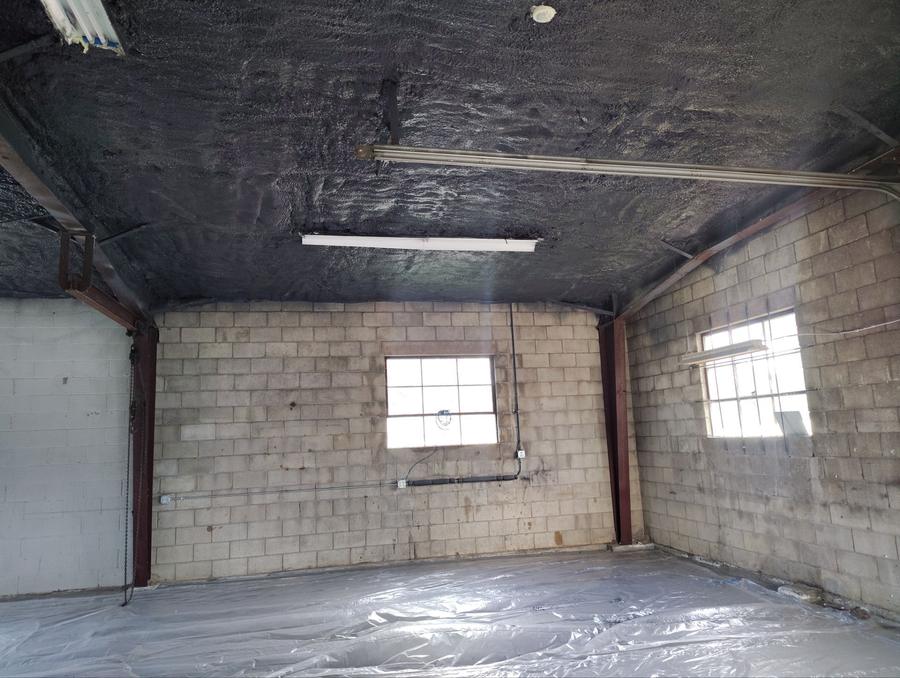
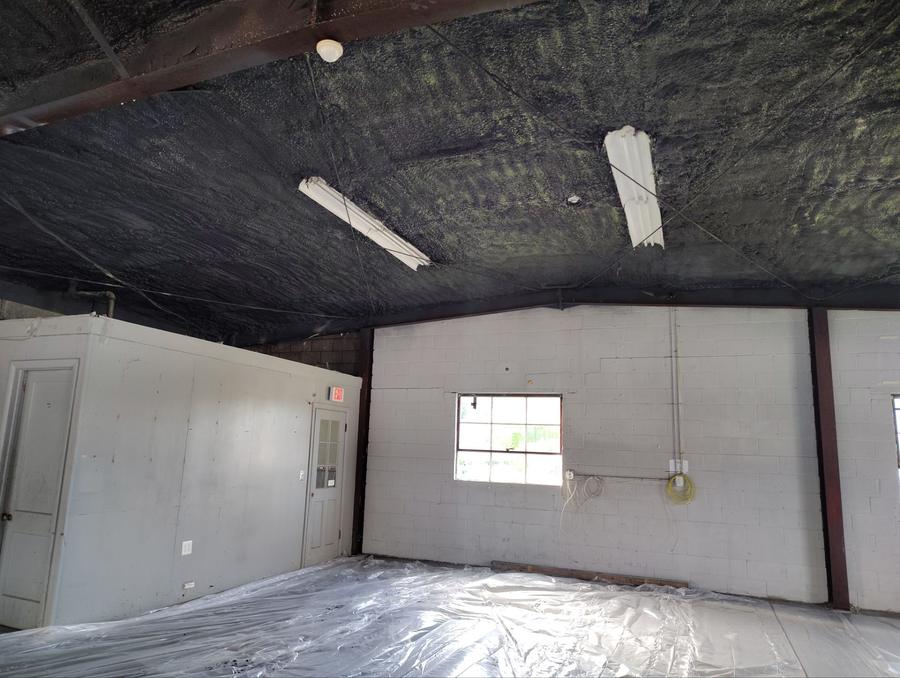
Litchfield’s 4,117 housing units split down the middle at 1965, the median year built, and the halves are evenly weighted: 22.9% of the stock comes from the 1960s and 70s and exactly the same 22.9% from the 1980s and 90s. Behind them sit 27.7% built before 1940 and 17.3% from the 1940s and 50s, with 9.2% added since 2000.
This is the town of Litchfield, which takes in the boroughs of Litchfield and Bantam and the villages of East Litchfield, Milton and Northfield. It is not Litchfield County, though the town served as the county seat from 1751; the county has its own page, linked below. In town, 80.3% of units are detached houses and 82.2% of occupied homes are owner-occupied.
Utility gas heats just 2.1% of occupied homes. Fuel oil or kerosene heats 57.0%, electricity 16.8%, bottled gas 11.2% and wood 9.0%. Oil and propane are paid for before they are burned, so a tighter house repays itself as a tank that lasts further into the season; in a house on wood, the same saving shows up as fewer cords split and carried in.
The houses we insulate in Litchfield
Litchfield began as Bantam township, incorporated in 1719 and named for Lichfield in England. The town covers 56.8 square miles southwest of Torrington and includes part of Bantam Lake. U.S. Route 202 runs east and west through Bantam and Litchfield center, and Route 63 north and south through the center. Northfield, in the southeastern corner, is home to a large share of the town’s residents.
The borough of Litchfield was laid out in 1751. Its historic district runs along both sides of North and South Streets between Gallows Lane and Prospect Street, and South Street holds the Oliver Wolcott House and the Tapping Reeve House and Law School, where the first law school in the United States opened in 1784. Milton Center is a historic district of its own. Across town, 1,141 homes predate 1940.
In houses that old, some of the worst leaks do not look like leaks. A fireplace flue that has not held a fire in decades is an open chimney unless its damper shuts tight. A kitchen wing or ell added later has a lower roof, a seam where it meets the main house and a small attic of its own, often closed off from the main attic and never insulated. The attic door at the top of a stairway is often a plain board door with gaps on every side, and the whole house pushes warm air up against it.
The 505 homes of the 1950s and 408 of the 1960s are capes, ranches and early split-levels. One detail catches a lot of them: where an attached garage sits beside the house, the wall between the garage attic and the house attic often stops short or was never closed, so garage air, fumes included, has a path into the house attic and down through its ceiling. Closing that wall comes before any depth is added.
The 341 homes of the 1990s, 226 of the 2000s and 55 built since 2020 have insulated walls; what they need is usually small and overhead.
Cathedral ceilings and the house with no attic
Houses of the 1970s and 80s, 533 and 601 of them, the 1980s being the town’s largest decade, were often built around open rooms: a cathedral ceiling over the living room, a loft above the kitchen, a skylight or two and a wood stove with a metal chimney through the slope. In a house like that, the sloped ceiling is the roof. There is no attic to add insulation to, only rafter bays packed with batts pressed against the underside of the deck.
Three things go wrong. Warm air leaks into the rafter bays through light boxes, the ridge, the skylight wells and the ring of clearance left around the stove chimney. The batts seldom fill the bay evenly, so heat slips past them at the edges. And the warmed deck melts snow that refreezes at the cold overhang, which is how an ice dam starts; Connecticut’s code tables list an ice barrier underlayment as required on roofs.
A cathedral ceiling can be fixed from inside or from outside. From inside, the ceiling finish comes down, every bay and penetration is sealed, and the bays are filled; closed cell foam gives the most R-value in a shallow rafter and also acts as a vapor retarder. From outside, when the roof is due anyway, rigid boards can go over the deck beneath the new roofing. Where neither is possible yet, sealing the lights, skylight wells and chimney ring from below is a real partial step. The chimney ring is closed with sheet metal and high-temperature sealant, never with foam.
We seal before we insulate
Heat leaves a house two ways: slowly through the materials, and quickly with moving air. Insulation deals with the first and does little about the second, which is why the holes come first.
In a Litchfield contemporary with its ceiling opened, the order runs: seal the ridge and the tops of the walls under each rafter bay, then the skylight wells and every light box, then the chimney ring in sheet metal; seal the loft knee walls and the rim joist in the basement; only then fill the bays. In an old borough house, the flues, the ell attic and the attic stair door come before the attic floor gets its depth.
If a quote specifies a depth of insulation and never mentions air sealing, it is half a job.
What insulation costs in Litchfield
Most of our projects run between $3,500 and $12,500. A cathedral ceiling is priced on its area, on whether the finish comes down from inside, and on the skylights and chimney that pass through it. An old house turns on the attic floor, the ell and the flues. A 1950s or 60s house is mostly its attic and the wall it shares with the garage attic.
Open cell foam runs R-3.9 to R-4.2 per inch. Closed cell runs R-6.9 to R-7.1 per inch and also acts as a vapor retarder, which is why it costs more and why it is right in some assemblies and unnecessary in others. All products are manufactured in the United States and meet applicable building code and safety standards. ENERGY STAR says sealing air leaks and adding insulation can save up to 10% on annual energy bills.
Insulation rebates in Litchfield
Litchfield’s electric company is Eversource, and Eversource is also the town’s gas company. Home Energy Solutions, from Energize Connecticut, is open to customers of Eversource, United Illuminating, Connecticut Natural Gas and Southern Connecticut Gas, whatever fuel heats the house, so a home on oil, propane or wood signs up through Eversource electric. Eligible homes have one to four units and six years without the program’s services, and a tenant needs the landlord to approve.
The standard visit is $40, the copay since 1 April 2026, and it is carried out by an authorized contractor. Safety testing is done first. A blower door then shows where the air leaks are, and a house with forced hot air or central air conditioning has its ducts tested. The program provides up to seven hours of air sealing without charge and bills $10 per hour past that. The two-visit model may be recommended for a house built prior to 1985. The program is subject to available funding and may keep a waiting list.
The 2026 Energize CT insulation rebate pays up to $2.00 per square foot or 75 percent of the total cost, whichever is less, up to a maximum of $10,000. It lists attic floors, floored-over attics, walls, basement and garage ceilings and rim joists. Foam sprayed under the deck of a cathedral roof is not one of those areas; get the program’s answer before assuming money for it. The steps are fixed: the insulation is recommended during a Home Energy Solutions visit, the project is approved before installation, and an approved contractor from the Energize CT Insulation Installers Network does the installing.
Income tiers matter here. For a family of four, Energize CT’s 2026–2027 default for Enhanced Incentives, a no-cost visit and insulation at up to $2.50 per square foot, runs from $93,682 to $124,908, and Litchfield’s median household income of $106,912 sits inside it; the real range is set by zip code, and income has to be verified. The same family at $93,681 or less is Income Eligible, where service costs nothing and insulation coverage reaches 100 percent; at $124,909 or more it is standard. Settle the tier before paying a copay.
Only work by the program’s network installers earns the rebate, so ask any installer, including us, whether they are in that network, and compare prices after any rebate. For financing, Smart-E from the Connecticut Green Bank reaches $50,000, no money down, for insulation in an owner-occupied home of one to four units, at 6.99% APR on 5-, 7- and 10-year terms, 7.49% on 12 and 7.99% on 15 where a lender offers it; ask whether your contractor participates. Connecticut repealed its sales-tax exemption for residential weatherization products effective January 1, 2016, the Inflation Reduction Act’s HER and HEAR rebates are not available in the state, and Section 25C ended for anything placed in service after 31 December 2025, so no federal tax credit covers insulation installed in 2026. Our Connecticut rebate guide covers each program.
Code and climate in Litchfield
67.9% of Litchfield’s housing was built before 1980. The town, like every part of Connecticut, is in climate zone 5A.
Applications for new homes and additions filed from 1 October 2022 fall under the 2022 Connecticut State Building Code, Connecticut’s amended version of the 2021 IECC. It sets ceilings at R-60, which R-49 meets where it keeps its full, uncompressed depth out over the wall top plate at the eaves. Walls in wood framing need R-30 cavity, R-20 cavity and R-5 continuous, R-13 cavity and R-10 continuous, or R-20 continuous. Floors need R-30; basement walls R-15 continuous, R-19 cavity, or R-13 cavity and R-5 continuous; windows U-0.30. A new home is blower-door tested and must reach 3.0 air changes per hour at 50 pascals on the prescriptive path, never more than 5.0. Connecticut’s next code, based on the 2024 IECC, has been adopted in draft, but its effective date has been delayed.
Common questions about insulation in Litchfield
Do you install insulation in Litchfield, CT?
Yes, across the town of Litchfield: the borough and its historic district, Bantam, Northfield, Milton and East Litchfield. If you are looking for the wider county, the Litchfield County page lists the towns we cover there. In town, the work runs from the old houses of North and South Streets, where flues and ell attics come first, to 1950s ranches with open garage walls and the cathedral-ceiling houses of the 1970s and 80s.
How much does insulation cost in Litchfield?
Most projects run $3,500 to $12,500. A cathedral ceiling costs more per square foot than an open attic because the bays have to be reached from inside or covered from outside, and skylights and a stove chimney add to the sealing. An old house is priced on its attic floor, ell and flues. A 1950s or 60s house is often the smallest job. The scope and price come on paper, at no charge.
Are there insulation rebates in Litchfield?
Yes, through Energize Connecticut. Eversource serves the town for electricity and gas, and a home heated by oil, propane or wood joins Home Energy Solutions through Eversource electric for the standard $40 copay. The 2026 rebate can cover up to $2.00 a square foot or 75 percent of cost, whichever is smaller, with a $10,000 ceiling, when a visit recommends the work, the program approves it first and a network installer does it. Foam under a cathedral roof deck is not a listed area. There is no federal tax credit in 2026.
Our 1980s house has a cathedral ceiling with no attic above it. Can it be insulated?
Yes, from one side or the other. From inside, the ceiling comes down, the ridge, lights, skylight wells and chimney ring are sealed, and the rafter bays are filled, with closed cell foam where the rafters are shallow. From outside, rigid boards go over the roof deck when the roof is replaced. If neither fits your plans yet, sealing the fixtures and chimney ring from below cuts the leakage now and does not close off either option later.
Free estimate in Litchfield
Our free estimate is a look at the house on our own account, apart from Home Energy Solutions, and no rebate hangs on it. Under a cathedral ceiling we check the light boxes, the skylight wells, the stove chimney and any signs of past ice dams. In an old house we check the flues and dampers, the ell attic, the attic stair door and the attic floor. In a 1950s house we look for the open wall between the garage attic and the house. Nothing is owed for the written scope and price.
Reach us at 914-825-6824 from 8am to 8pm, every day, or through the contact form. The Home Insulators is based in New Rochelle, NY; a 100-plus in-house crew of its own installs every job, and none of it is subcontracted.
Learn more
- Litchfield County, the wider county
- Torrington, northeast of Litchfield
- Thomaston, to the south
- New Milford, along Route 202
- Roof and cathedral ceiling insulation
- Rigid board insulation
- Air sealing