No single era owns Plymouth’s housing. Of 5,080 units, 19.6% predates 1940, 22.1% dates from the 1940s and 50s, 20.2% from the 1960s and 70s, 23.5% from the 1980s and 90s and 14.5% has been built since 2000. The 1980s were the busiest decade, with 766 homes, and 304 more went up in the 2010s. The median unit dates from 1970, and 61.9% of the stock was standing before 1980.
74.9% of units are detached houses and 79.1% of occupied homes are owner-occupied. The rest of the stock is small buildings: 326 units in two-unit buildings, 357 in buildings of three or four and 224 in buildings of five to nine.
Oil does most of the heating. 55.4% of occupied homes burn fuel oil or kerosene, 18.7% use utility gas, 13.5% electricity, 8.4% bottled gas and 3.1% wood. On oil, what sealing and insulation return shows up as fewer deliveries across a winter.
The houses we insulate in Plymouth
Plymouth is three villages and a set of smaller sections on 22.4 square miles between Bristol to the east and Waterbury to the south. Terryville, the largest community, is in the eastern part of town, Plymouth Center is in the west, and Pequabuck sits on the eastern border southeast of Terryville. Greystone, East Plymouth, Allentown, Hancock, Tolles and Town Hill fill in the rest. U.S. Route 6 ties Terryville and Plymouth Center together.
The 1940s built 431 homes and the 1950s 692, mostly small capes and ranches. The 1950s ranch is a plain box with a long, low attic, and its weaknesses are the ones that come with a low roof: a hatch in a hallway ceiling, loose fill that has settled to a few inches, bath fans that end in the attic, and top plates that were never sealed. Its cellar has a bare rim joist all the way around. A cape of the same years has its second-floor rooms tucked behind knee walls with the cold attic on the other side.
The 435 homes of the 1960s and 592 of the 1970s are largely raised ranches and split-levels. The raised ranch loses heat through its rim joist, which stands above grade around the lower level, and through the garage ceiling under the bedroom over it; the split-level adds a side wall where the upper floor rises beside a lower attic with nothing sealing it.
The 1980s and 90s, 23.5% of the town, and everything since are colonials and larger raised ranches with insulated walls. What they usually need is at the top of the house: sealing at recessed lights, the pull-down attic stair, the bath fans and the ductwork, and a proper floor under any bonus room over the garage.
The oldest houses: Route 6, Plymouth Center and Terryville
The oldest home in Plymouth stands on Route 6 and dates to between 1690 and 1700. The town was once Northbury, a section of Waterbury first used as its burying ground. The town incorporated in 1795 and became known nationally for its clocks: Eli Terry built them with Seth Thomas and Silas Hoadley in Greystone before opening his own factory in Plymouth Center, and his son Eli Terry Jr. helped open the Eagle Lock Company. In the 1880s Plymouth Hollow split off to become Thomaston. Plymouth Center and the East Plymouth Historic District are both on the National Register, and 996 homes in town predate 1940.
A house from the 1700s is usually timber-framed, not stud-framed. Its walls may be plank, or studs of uneven size set between heavy posts, so there is rarely a clean cavity to fill. A central chimney, where there is one, runs up through the middle of the house and leaks around its whole perimeter at every floor. The cellar is often fieldstone with a sill resting on it. We start that kind of house at the attic floor and the cellar, where the biggest leaks are, and only then decide whether any wall is worth opening.
A house of the later 1800s or early 1900s is more often balloon-framed, with studs running from the sill to the roof and no blocking between floors. Air from the cellar rises inside those walls and comes out in the attic. That makes the top and bottom of every wall cavity the first thing to seal. Once the wiring has been checked and any knob-and-tube dealt with, those cavities can usually be filled.
We seal before we insulate
Insulation is a blanket; it slows heat but lets air pass. A house full of open gaps stays drafty however much insulation goes on top of them.
In an old Plymouth Center house the sequence starts at the attic floor: seal around the chimney with metal flashing and fire-rated sealant, close the tops of the interior partitions and the balloon-framed outside walls, and seal every wire and pipe hole. Then the cellar: the sill where it meets the fieldstone, the rim, and the bottoms of the wall cavities. Only then does insulation go onto the attic floor, and the walls come last, if at all.
If a quote specifies a depth of insulation and never mentions air sealing, it is half a job.
What insulation costs in Plymouth
Most of our projects run between $3,500 and $12,500. A 1950s ranch is priced on its attic area and the length of its rim joist. A raised ranch adds the garage ceiling. An old house depends on how much attic floor and cellar can be reached, the wall cavities to close top and bottom, and whether walls are filled. A newer colonial is mostly attic sealing and the bonus room floor.
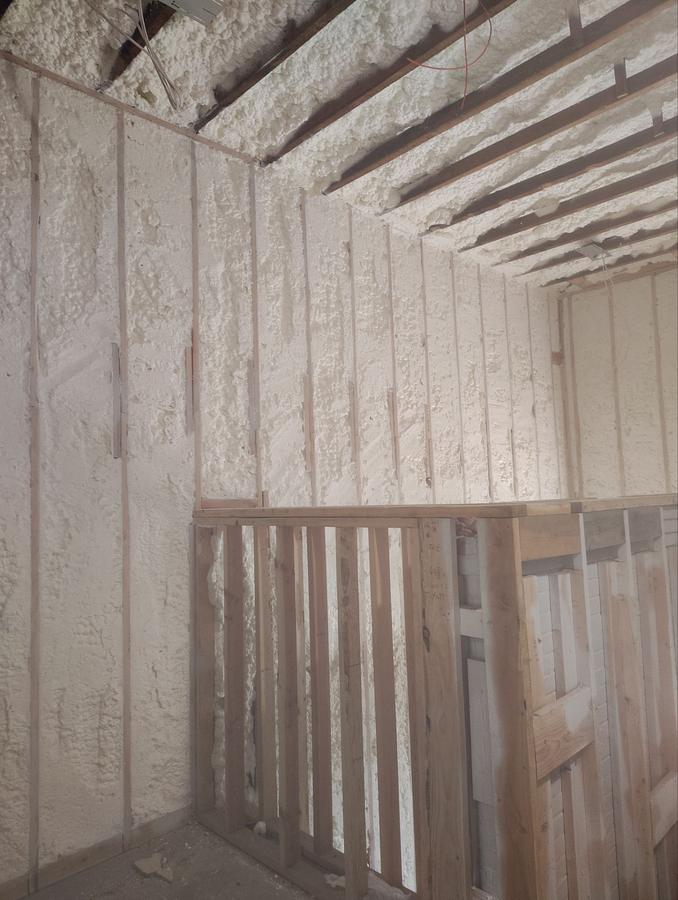
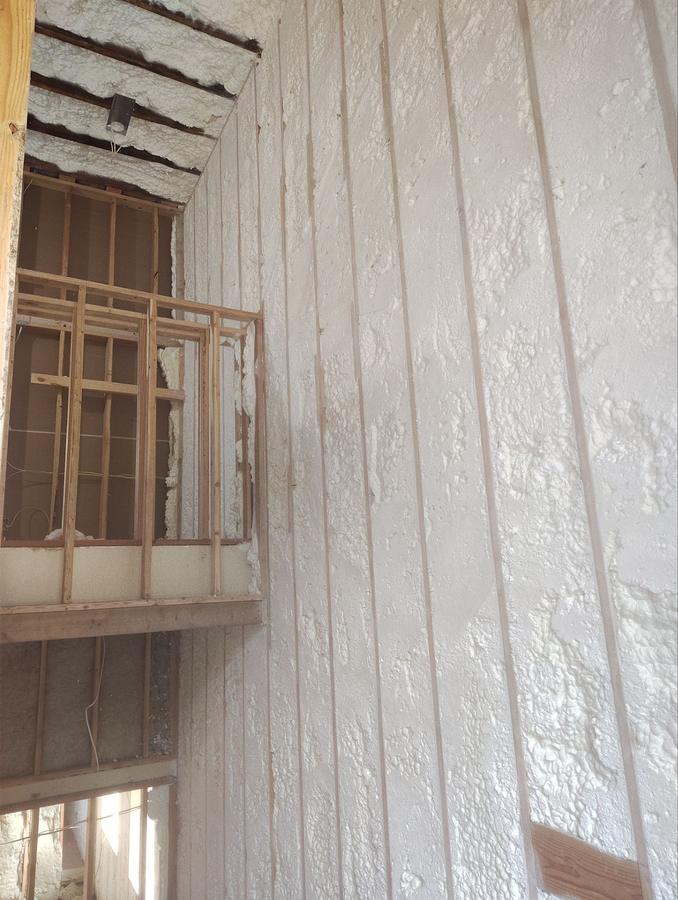
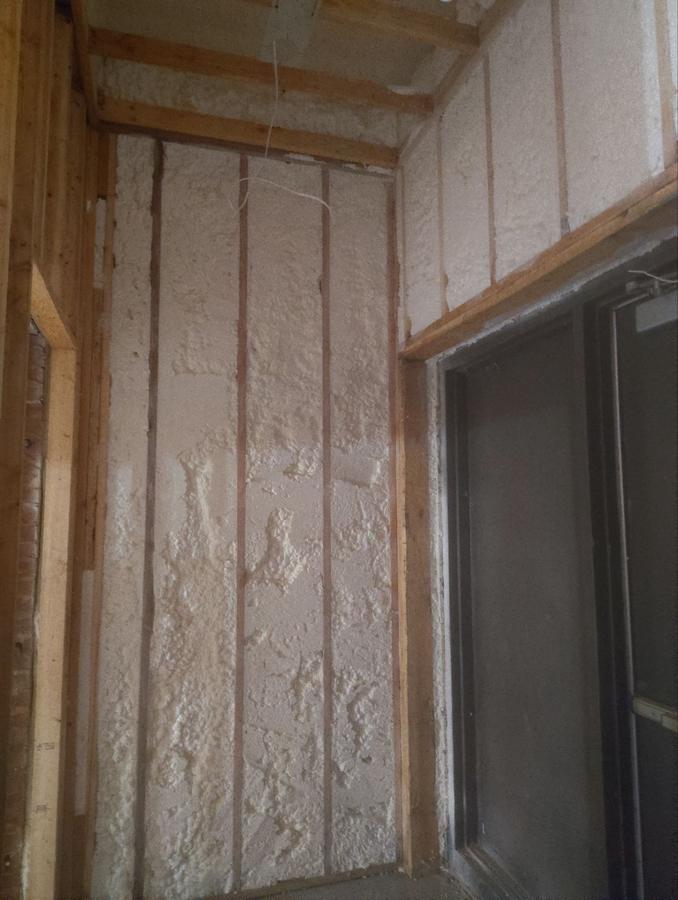
Open cell foam runs R-3.9 to R-4.2 per inch. Closed cell runs R-6.9 to R-7.1 per inch and also acts as a vapor retarder, which is why it costs more and why it is right in some assemblies and unnecessary in others. All products are manufactured in the United States and meet applicable building code and safety standards. ENERGY STAR says sealing air leaks and adding insulation can save up to 10% on annual energy bills.
Insulation rebates in Plymouth
Plymouth gets its electricity from Eversource, and Eversource is the gas company too. The Energize Connecticut assessment, Home Energy Solutions, is open to customers of Eversource, United Illuminating, Connecticut Natural Gas and Southern Connecticut Gas, whatever fuel heats the house, so an oil-heated house in Terryville signs up with its electric account. Homes of one to four units are eligible if they have not had the program’s services in the last six years; renters need the landlord’s approval.
Since 1 April 2026 the standard visit has carried a $40 copay. An authorized contractor starts with health and safety tests, uses a blower door to find the drafts and air leaks, and tests the ducts where there is forced hot air or central air conditioning. There is no charge for the first seven hours of air sealing; past that, a larger or older home pays $10 an hour. A home built before 1985 may be recommended for two visits, and properties of two to four units always get two. Everything depends on available program funding, and a waiting list may form.
The 2026 Energize CT insulation rebate pays up to $2.00 per square foot or 75 percent of the total cost, whichever is less, up to a maximum of $10,000, for attic floors, floored-over attics, walls, basement and garage ceilings and rim joists. A wall qualifies when its existing insulation is R-4 or less and it finishes at R-13 or more. The order is fixed. A Home Energy Solutions visit recommends the insulation, the program approves the project before installation, and an approved contractor from the Energize CT Insulation Installers Network installs it. Foam on the underside of a roof deck does not appear among the qualifying areas, so ask the program before you count on a rebate for it.
Every address in Plymouth is in a state-designated environmental justice community, which can raise the Energize CT insulation incentive to $2.50 per square foot, up to $15,000. That covers Terryville, Pequabuck and Plymouth Center alike. The designation is reviewed by the state each December or January.
Energize CT sets three income tiers, using its figures for the 2026–2027 season. For a household of three, $78,692 or less is Income Eligible: a no-cost visit and up to 100 percent coverage of insulation costs. $78,693 to $104,924 is Enhanced Incentives: a no-cost visit and up to $2.50 per square foot, with the true range depending on your zip code. $104,925 and above is the standard tier. If your income is close to a line, confirm your tier before any copay changes hands.
Because the rebate is paid only on work by an Insulation Installers Network contractor, ask every installer you talk to, including us, whether they belong to that network before you sign anything. If you would rather not wait for the program, we will price the job on its own merits.
The Connecticut Green Bank’s Smart-E Loan covers insulation with no money down, up to $50,000, for owner-occupied homes of one to four units; rates are 6.99% APR for 5, 7 or 10 years, 7.49% for 12 and 7.99% for 15 where a lender offers that term. It goes through participating contractors, so ask whether yours is one. A 2026 insulation job carries no federal tax credit: Section 25C ended for anything placed in service after 31 December 2025, so be skeptical of any contractor still advertising it. Our Connecticut rebate guide goes through each program.
Code and climate in Plymouth
61.9% of Plymouth’s housing was built before 1980. Plymouth is in climate zone 5A, which covers every Connecticut county, and the state’s code tables set the winter design temperature at 7°F.
Anything newly built or added with an application filed from 1 October 2022 comes under the 2022 Connecticut State Building Code, which is the 2021 IECC with Connecticut amendments. Ceilings: R-60, with R-49 accepted wherever it keeps its full, uncompressed depth out over the wall top plate at the eaves. Wood-frame walls: R-20 continuous, R-30 in the cavity, R-20 cavity with R-5 continuous, or R-13 cavity with R-10 continuous. Floors: R-30. Basement walls: R-19 cavity, R-15 continuous, or R-13 cavity with R-5 continuous. Windows: U-0.30. Air tightness: a new home tests at 3.0 air changes per hour at 50 pascals on the prescriptive path, and never worse than 5.0. Connecticut has adopted a draft of its next code, based on the 2024 IECC, but its effective date has been delayed.
Common questions about insulation in Plymouth
Do you install insulation in Plymouth, CT?
Yes, in Terryville, Plymouth Center, Pequabuck, East Plymouth, Greystone and the rest of town. The work runs across every era Plymouth has: timber-framed houses along Route 6, balloon-framed village houses, 1950s capes and ranches, raised ranches of the 1960s and 70s, and colonials from the 1980s on. In a newer house the scope is often small, and we say so. In the old houses we begin at the attic floor and the cellar.
How much does insulation cost in Plymouth?
Most projects run $3,500 to $12,500. A 1950s ranch is priced on its attic and rim joist, and a raised ranch adds the garage ceiling. An old house depends on how much of the attic floor and cellar we can reach, how many balloon-framed wall cavities need closing top and bottom, and whether walls get filled. A newer colonial is usually attic sealing and a bonus room floor. After a free walk-through, you get the price in writing.
Are there insulation rebates in Plymouth?
Yes. Plymouth is Eversource for electricity and gas, and Home Energy Solutions accepts any heating fuel for a $40 copay, or no copay in the income-qualified tiers. The 2026 Energize CT rebate pays up to $2.00 per square foot or 75 percent of cost, whichever is less, to $10,000, and because all of Plymouth is a designated environmental justice community the incentive can reach $2.50 per square foot, up to $15,000. It requires the visit, approval first and a network installer. There is no federal credit in 2026.
Our Terryville house is more than a century old. Can the walls be insulated?
Often, but the walls come after the attic and the cellar. A Terryville house of that age may well be balloon-framed, with cavities open from cellar to attic, so the tops and bottoms get sealed first. Any knob-and-tube wiring has to be dealt with before a wall is filled. Where the cavities are clear, they can be filled through small holes. Energize CT lists walls as a qualifying area when the existing wall is R-4 or less and it finishes at R-13 or more.
Free estimate in Plymouth
In an old house we go up to the attic floor and around the chimney, down to the sill and the fieldstone, and check the wiring before any talk of walls. In a ranch or raised ranch, the attic, the rim and the garage ceiling. That is our free estimate, separate from Home Energy Solutions and no substitute for it; it does not qualify a house for a rebate. The written scope and price cost nothing and commit you to nothing.
Call 914-825-6824 any day from 8am to 8pm, or send a note through the contact form. We are a New Rochelle, NY company, and our own 100-plus in-house crew is on every job, never a subcontractor.
Learn more
- Insulation contractors across Litchfield County
- Thomaston, once Plymouth Hollow
- Watertown, west along Route 6
- Insulating older homes
- Wall insulation
- Basement and rim joist insulation