Attic Foil
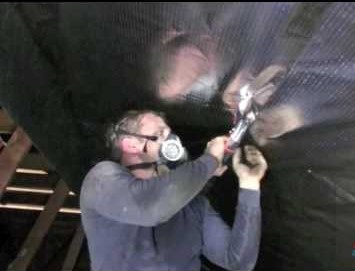
Radiant Barriers often have other names such as Attic Foil or Attic Heat Shield or Reflective Insulation.
A Shiny Surface working to Save You Money
Shiny barriers are no different than the shiny shields you sometimes use to protect your care from damaging sunlight. A radiant barrier, during the summertime, reflects the suns heat energy back towards the roof, keeping the attic cooler. In the winter months the radiant barriers does just the opposite. Instead of protecting the house from the hot sun, the barrier keeps the warmth of the house intact and reflects it back into the house. The most savings from radiant barriers take place in warmer climates where air conditioning is operated more often. In a hot, dry, climate radiant barriers can cut the cost of cooling as much as 17%.
Not a Substitute
Because attic foils are also called “Radiant Barrier Insulation”, it is easy to become confused and think that it is the only thing needed for the attic. This is not true, while a radiant barrier slows the movement of heat by reflecting the radiant energy of the sun, it works in tandem with the other insulation, not as a substitute. Sealed ceilings slow the process of convective heat, Insulation slows the process of convective heat loss.
Different Type of Radiant Barriers
The most common type of Radiant barrier is a Plastic Sheet with a reflective foil on one side or on both sides. This type is usually attached on the bottom edges of the rafters in the attic by a staple. Certain designs of rigid foam and fiberglass batt insulation have radiant barrier material on the faces, so they can provide the benefits of insulation and a heat reflecting barrier. Others are within a plastic material resembling bubble-wrap. These kinds can be fastened with staples just like standard plastic sheet material. If you want to keep your attic floor open for storage, rigid foam insulation combined with a radiant barrier and air sealing to provide similar results.