69.7% of LaGrange’s homes heat with fuel oil or kerosene. Bottled propane heats another 6.2% and wood 2.6%, while utility gas heats 10.1% and electricity 10.4%. In a town of 6,008 housing units, the heating bill for most households is a tank in the basement that a truck comes to fill.
It is also a town of owners in detached houses. 86.3% of units are single-family detached and 86.2% of occupied homes are owner-occupied; 2.1% of units sit in buildings of five to nine and 1.2% in buildings of ten to nineteen. The houses came in a long, steady run: 15.8% in the 1950s, 20.2% in the 1960s, 17.5% in the 1970s, 15.3% in the 1980s and 10.9% in the 1990s. The median dates from 1973, and 61.9% of the stock predates 1980.
LaGrange covers 40.3 square miles between the Town of Poughkeepsie to the west and Union Vale to the east, with Pleasant Valley to the north, Beekman to the southeast, and East Fishkill and Wappinger to the south. It was formed in 1821 as the town of Freedom, from parts of Beekman and Fishkill, and renamed in 1828 after the Marquis de Lafayette’s estate, because a town in Cattaraugus County already had the name. The Taconic State Parkway runs through it north to south, Route 55 crosses the middle through Freedom Plains, and Route 82 runs from Hopewell Junction to Moores Mill. LaGrangeville, in the southeast, is the largest community; the others include Freedom Plains, Titusville, Billings, Arthursburg, Manchester Bridge, Noxon and the LaGrange side of Red Oaks Mill.
The houses we insulate in LaGrange
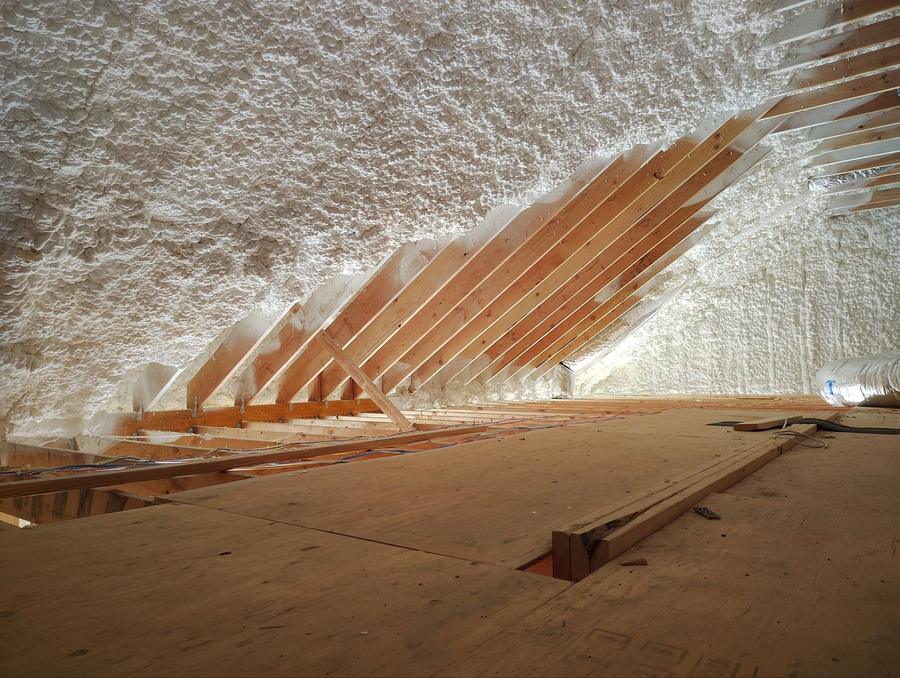
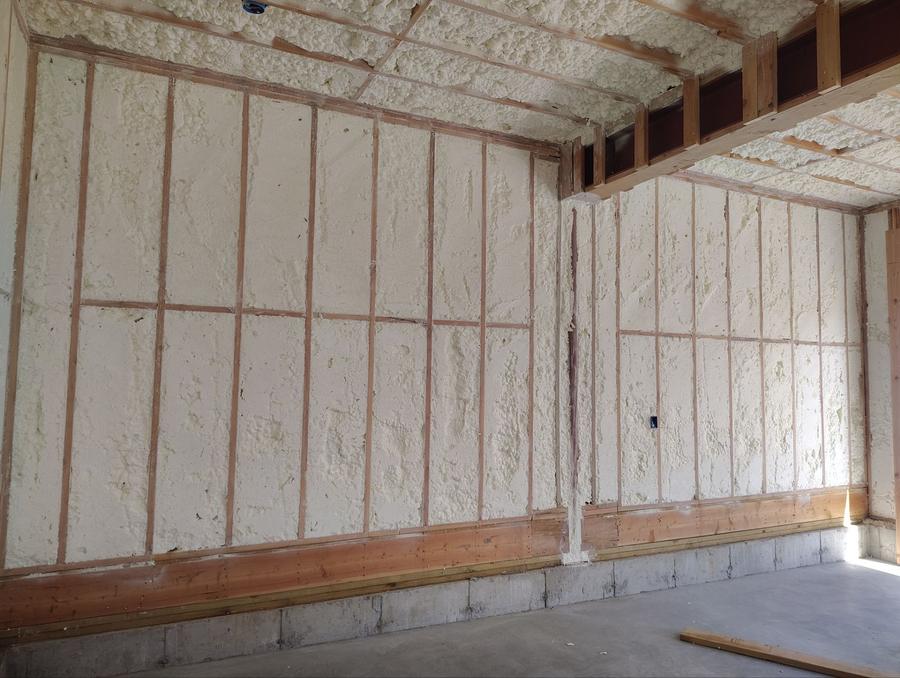
The 1960s were the town’s biggest decade, 1,216 units, and with the 1970s they make up 37.7% of LaGrange. Those are ranches, raised ranches and split-levels. The raised ranch is the one to understand: its lower level sits half below grade, often with a family room finished in paneling or drywall over a foundation wall that was never insulated, a garage beside it, and the oil boiler and tank in a utility room at one end. The rim joist runs bare around the whole house at the top of that foundation wall. Upstairs, a long, shallow attic holds a few inches of loose-fill, settled into the joist bays, over a ceiling full of unsealed top plates and a chimney chase.
The 1950s added 951 units, capes and small ranches for the most part. The cape’s upstairs bedrooms sit behind knee walls with a batt on the room side, nothing on the attic side and the floor joists running open to the eave, so outdoor air moves under the bedroom floors. The small ranch has a masonry chimney in the middle of a low attic, and the gap around it usually runs straight down into a wall cavity.
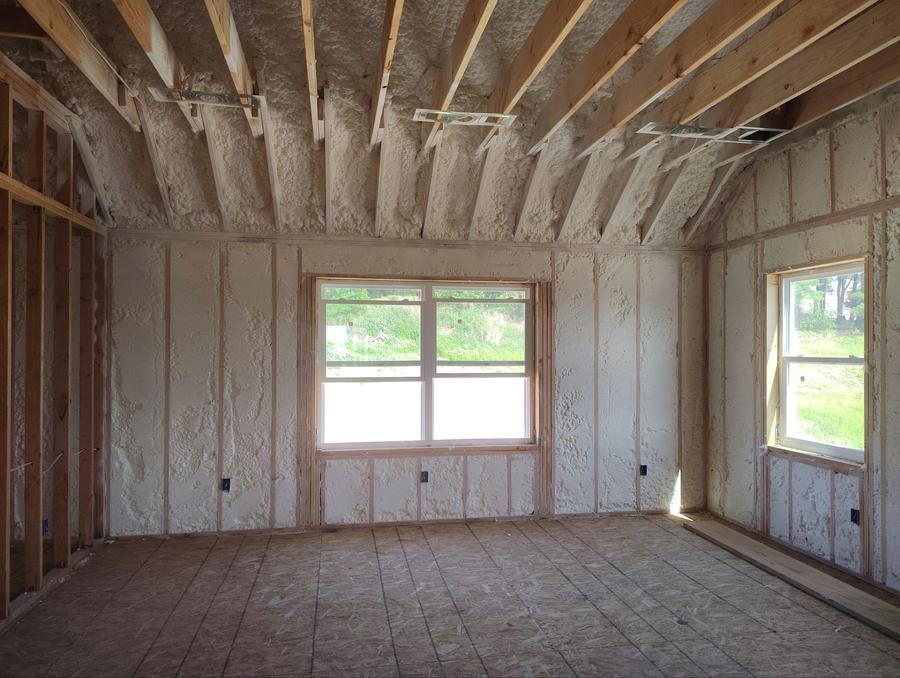
The 1980s and 90s, 26.2% of the town, brought colonials and contemporaries. Their walls hold batts and their trouble is up top: a bonus room over the garage with knee walls on two sides and an unheated garage under its floor, a two-story foyer whose wall backs onto attic space, recessed lights and a pull-down attic stair. The 11.9% built since 2000 adds larger colonials, often with ductwork and an air handler in the attic.
The oldest part of LaGrange is small: 312 units from 1939 or earlier. In those we plan for balloon framing and a stone foundation, and we check for knob-and-tube wiring before anything goes into a wall. The 230 townhouses and duplex halves, and the handful of small apartment buildings, get scoped around who owns the attic and the roof.
Oil tanks, woodstoves and what sealing saves
Central Hudson gas lines reach only parts of LaGrange, and many homes heat with oil, propane or electricity. For most owners there is no gas main to switch to. That shapes the math of insulation. The price of a gallon of oil moves from winter to winter and nobody can promise where it goes; what air sealing and insulation change is how many gallons the house needs. The more a household pays for each unit of heat, the sooner the same work pays for itself, and in an oil house the saving arrives as fewer deliveries.
Tightening an oil-heated house also changes how the boiler breathes. An older oil boiler usually draws combustion air from the room around it and vents up a masonry chimney, and both depend on some air leaking into the basement. So we look at the burner’s air supply and the chimney draft before we seal the rim joist, and test the draft again after. The 2.6% of homes that heat with wood get the same care: a woodstove in a raised ranch’s family room needs air to burn and a chimney that drafts, and we keep foam well clear of every flue.
An owner weighing a heat pump to get off oil should insulate first. New York’s heat pump program is moving to reward, and from 2028 require, a sealed and insulated house before it pays for a heat pump, and a house that loses less heat needs a smaller one.
We seal before we insulate
Insulation slows heat moving through a surface. It does nothing about air moving through a gap. Blow a new layer across a raised ranch’s attic, leave the rim joist bare, and the family room downstairs is still the room nobody uses in January.
In a LaGrange raised ranch with an oil boiler the order is: check the boiler’s combustion air and the chimney draft; seal and insulate the rim joist and sill with closed-cell foam, keeping clear of the flue and the oil line; seal the wall and the ceiling between the garage and the living space; upstairs, close the chimney chase with sheet metal and fire-rated sealant, seal the top plates, wire and plumbing holes, bath fan and attic hatch; set baffles at the eaves; blow the attic to depth; then test the draft again. In a cape, the knee walls and the joist bays behind them come before the flat attic.
If a quote specifies a depth of insulation and never mentions air sealing, it is half a job.
What insulation costs in LaGrange
Most of our projects run between $3,500 and $12,500. A raised ranch or split is priced mostly on the feet of rim joist, whether the half-buried family room walls are included, the garage wall and ceiling, and the attic area. A colonial moves with the attic over the second floor and the bonus room: its knee walls, its slopes and the floor over the garage. A cape is priced on its knee walls, eaves and slopes. The garage side of those scopes is explained in insulating a garage ceiling under living space.
Open cell foam runs R-3.9 to R-4.2 per inch. Closed cell runs R-6.9 to R-7.1 per inch and also acts as a vapor retarder, which is why it costs more and why it is right in some assemblies and unnecessary in others. All products are manufactured in the United States and meet applicable building code and safety standards. ENERGY STAR says sealing air leaks and adding insulation can save up to 10% on annual energy bills.
Insulation rebates in LaGrange
LaGrange buys its electricity from Central Hudson. Gas lines reach only parts of the town, and many homes heat with oil, propane or electricity. Central Hudson customers use NYSERDA’s Comfort Home, or EmPower+ if income-eligible, for insulation incentives.
NYSERDA’s Comfort Home program pays $2,500 toward sealing and insulating the attic and rim joist, $3,000 if walls and floors are added, and $2,000 more toward ENERGY STAR windows, through a NYSERDA-approved Comfort Home contractor. It is for market-rate owners of one- to four-family homes who pay the System Benefits Charge on their electric bill, and the house must meet every condition of the package it applies for. Comfort Home is open in 2026. It closes when the new utility programs start around January 2027, so a homeowner who wants Comfort Home money should not wait.
Comfort Home is likely to be the program most LaGrange owners look at: the town’s median household income, $128,824, is above Dutchess County’s EmPower+ line for a household of four, $106,880. Plenty of households earn less than the median, though, so check NYSERDA’s EmPower+ before assuming. A household of four at or below $80,160 can have air sealing and insulation done at no cost up to $14,000; under $106,880, EmPower+ pays half the cost up to $7,000. Owners and renters can apply, and the work goes through an EmPower+ contractor.
NYSERDA’s Green Jobs–Green New York program lends $1,500 to $25,000 over 5, 10 or 15 years, on the Central Hudson bill or as a monthly loan, after a no-cost energy assessment. All of these programs pay through their own participating contractors; confirm your eligibility and look up approved contractors on the MyEnergy portal before signing anything. Details are in our New York and New Jersey rebate guide.
Section 25C, the federal insulation tax credit, ended for work placed in service after 31 December 2025; a 2026 job in LaGrange carries no federal credit, whatever an ad says. New York has no state tax credit for insulation.
Code and climate in LaGrange
61.9% of LaGrange’s housing was built before 1980. The capes of the 1950s and the ranches and raised ranches of the 1960s and 70s went up before New York’s first statewide energy code took effect on 1 January 1979. Dutchess County is Climate Zone 5.
A new house in LaGrange is built to the 2025 Energy Conservation Construction Code of New York State, in force since 31 December 2025. For Zone 5 it sets R-49 ceilings, with uncompressed R-38 accepted where its full height reaches over the wall top plate at the eaves; R-30 floors; R-15 continuous, R-19, or R-13 plus R-5 continuous on basement and crawl space walls; U-0.27 windows; and a blower door result of 3.0 air changes per hour at 50 pascals or less.
A 1968 raised ranch is not measured against that table. Unaltered parts of an existing house need not comply, no blower door test is required when you insulate an existing home, and any wall or ceiling cavity the work opens must be filled to full depth. ENERGY STAR recommends R-60 for an uninsulated attic in this climate, and R-49 where 3 to 4 inches are already in place.
Common questions about insulation in LaGrange
Do you install insulation in LaGrange, NY?
Yes, across the town: LaGrangeville, Freedom Plains, Titusville, Billings, Arthursburg, Manchester Bridge, Noxon and the LaGrange part of Red Oaks Mill. Most of the work is the ranch, raised ranch, split and cape of the 1950s, 60s and 70s, usually with a bare rim joist, a thin attic over an unsealed ceiling and an oil boiler in the basement. We also insulate the 1980s and 90s colonials with bonus rooms over the garage, and the older farmhouses.
How much does insulation cost in LaGrange?
Most projects run $3,500 to $12,500. In a raised ranch or split the price moves with the length of rim joist, the half-buried family room walls, the garage wall and ceiling, and the attic area. A colonial is priced on the attic over the second floor and the bonus room’s knee walls, slopes and floor. A cape is priced on its knee walls, eaves and slopes. You get a written scope and price after a free walk-through.
Are there insulation rebates in LaGrange?
Yes. LaGrange is Central Hudson electric territory, so market-rate owners of one- to four-family homes can use NYSERDA’s Comfort Home: $2,500 for sealing and insulating the attic and rim joist, $3,000 with walls and floors, through a NYSERDA-approved Comfort Home contractor, until the utilities’ new programs start around January 2027. Households under Dutchess County’s income lines can use EmPower+ instead. The federal 25C credit ended for work placed in service after 31 December 2025, and New York has no state insulation tax credit.
Our raised ranch has an oil boiler in the basement. Is it safe to seal the basement tight?
Yes, when it is done in the right order. Many older oil boilers take their combustion air from the room and vent up a masonry chimney, and both rely on some leakage. Before sealing we check where the burner gets its air and how the chimney drafts; if the boiler needs an outside air supply or a chimney liner, the scope says so. We keep foam clear of the flue and the oil line, then test the draft again when the rim joist is done.
Free energy audit in LaGrange
We go through the house top to bottom: the attic, the depth of the old loose-fill, the chimney chase, the top plates and the eaves; the bonus room or the knee walls; the garage wall and ceiling; then the lower level, the rim joist and the sill. We finish at the boiler or furnace, the chimney and any woodstove, because they decide how tight the house can safely go. Then a written scope and a price. No charge, no obligation.
Call 914-554-2289 or reach us through the contact form. Open 8am–8pm, seven days. The Home Insulators has been family-owned and based in New Rochelle, NY since 2015, and our own 100-plus in-house crew does the work, never a subcontractor.
Get my free estimateor call 914-554-2289, 8am–8pm every day