The Home Insulators

Insulation Photo Gallery

Every photograph on this page was taken on one of our own job sites. Nothing here is a stock image. They show finished and in-progress work by The Home Insulators across Westchester and Rockland County, New York, and Bergen County, New Jersey — attics, basements, crawl spaces, cathedral ceilings and new-build walls.

Most of what you are looking at is spray foam, which is the bulk of what we install. You will also see mineral wool batt where a job calls for it, and ductwork masked off and protected before spraying. The caption under each photo says plainly what it shows.

Want the same work at your house? Call 914-825-6824 for a free energy audit and estimate.
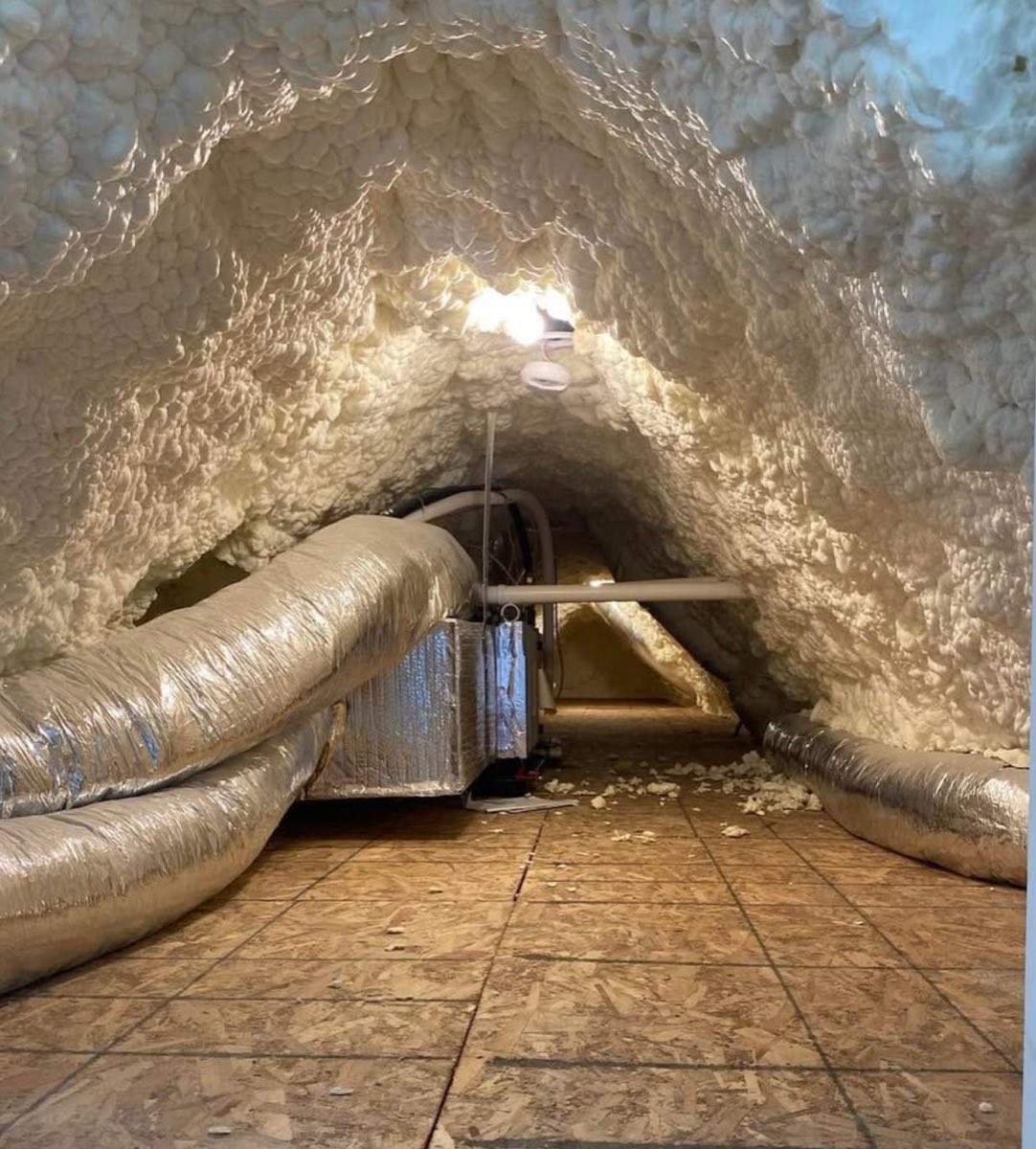
Sealed attic finished in spray foam with insulated ductwork running through it
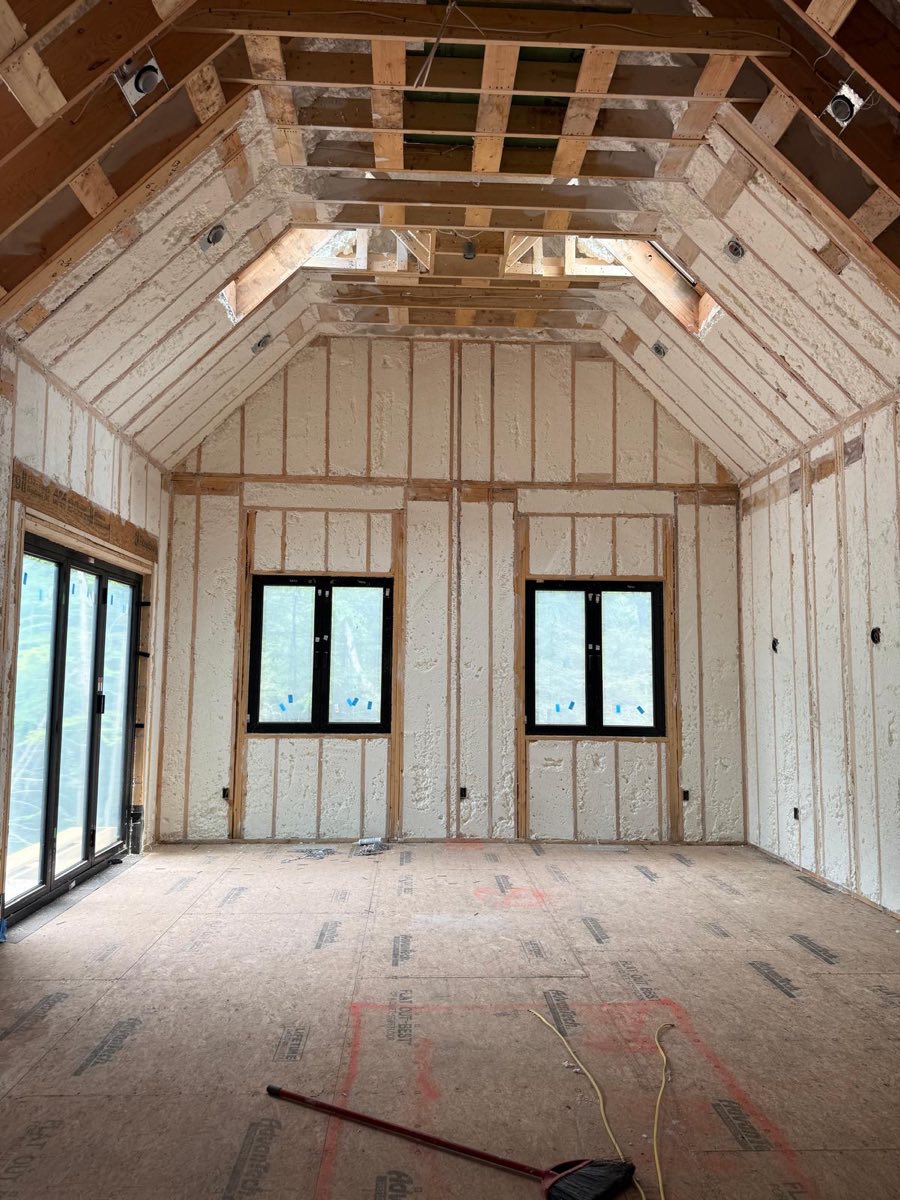
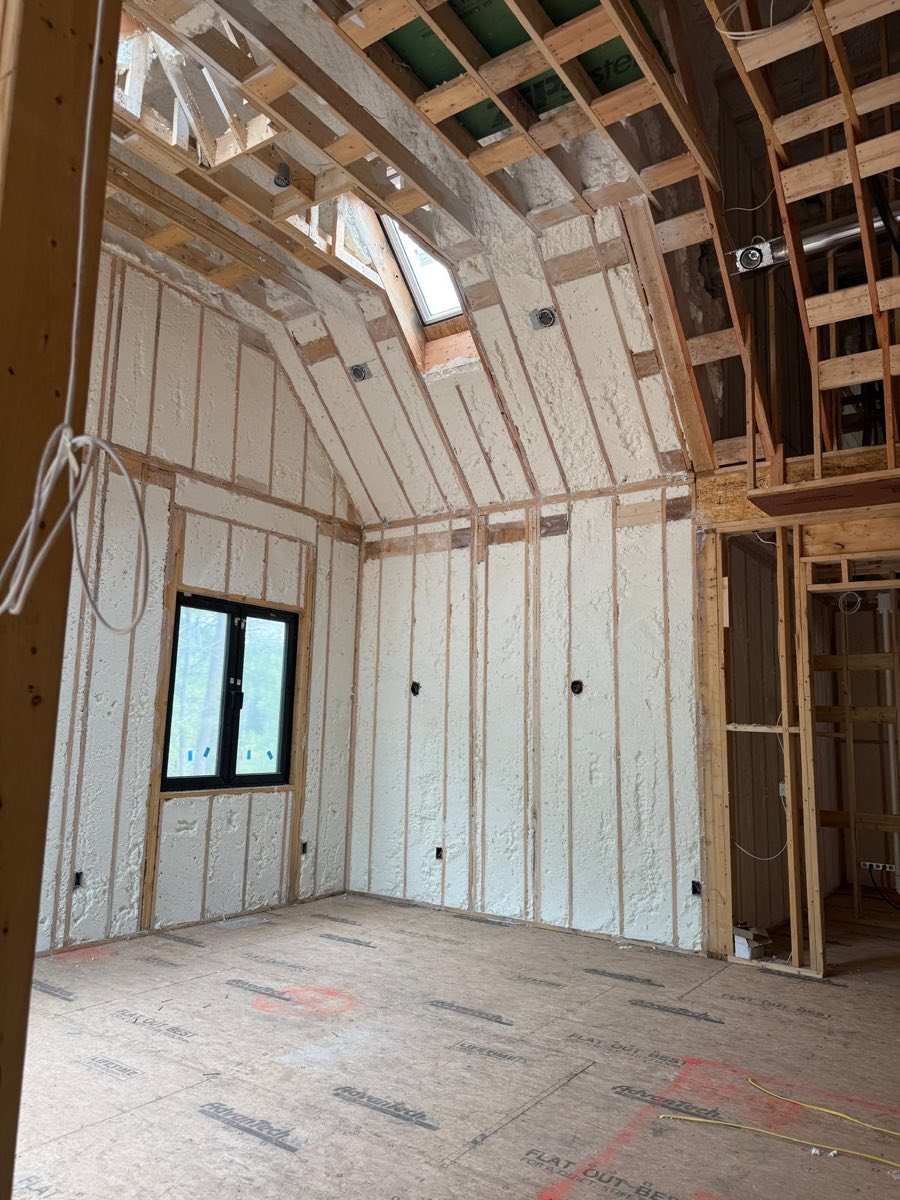
Spray foam insulation on the walls and vaulted ceiling of a new build
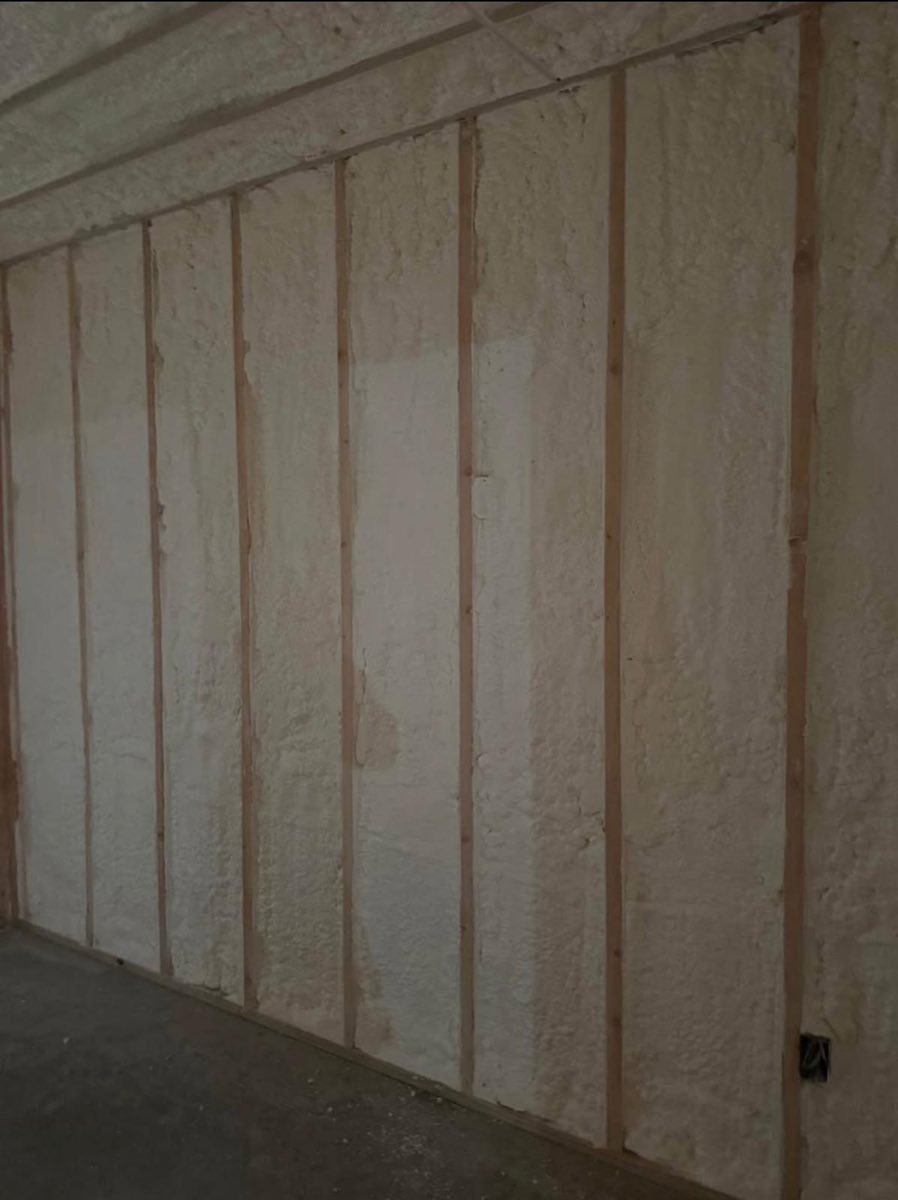
Closed-cell spray foam filling every stud bay of a basement wall
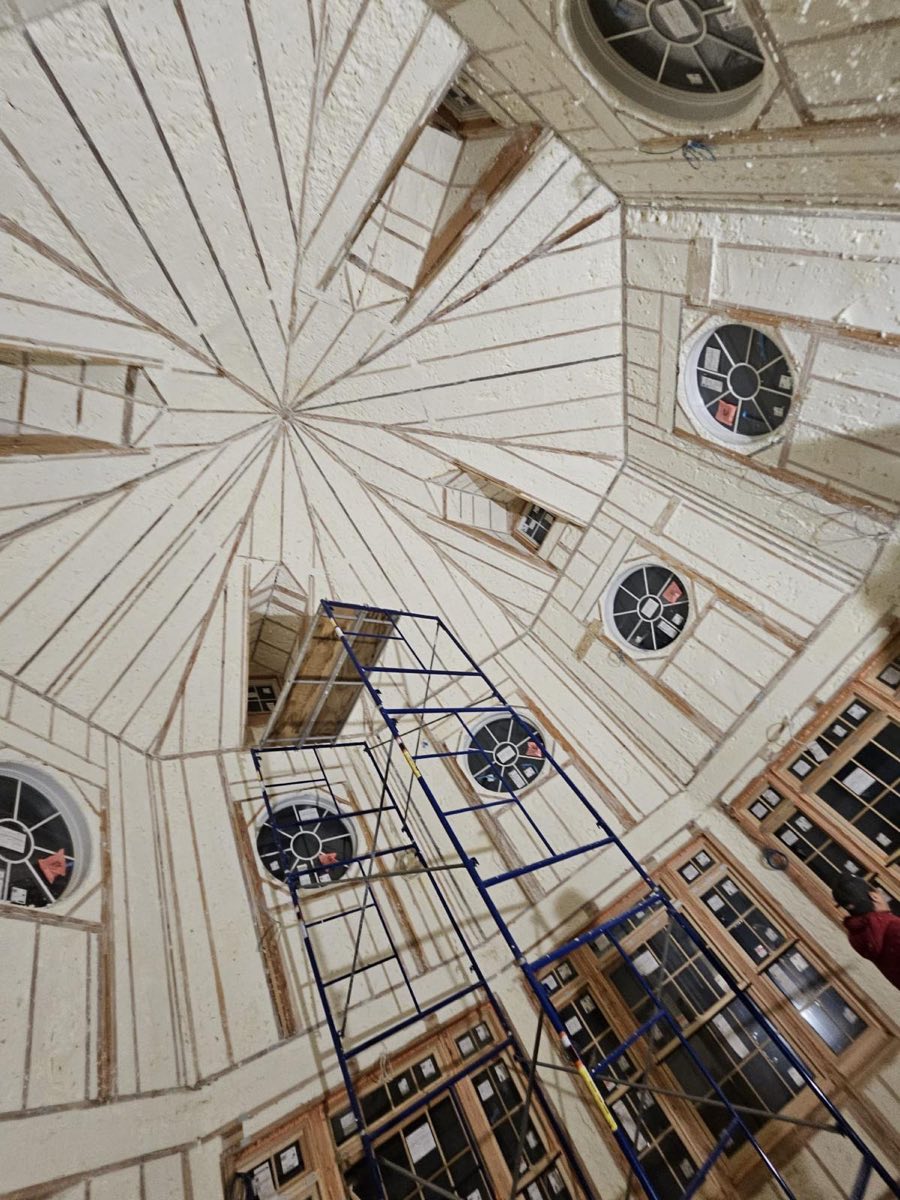
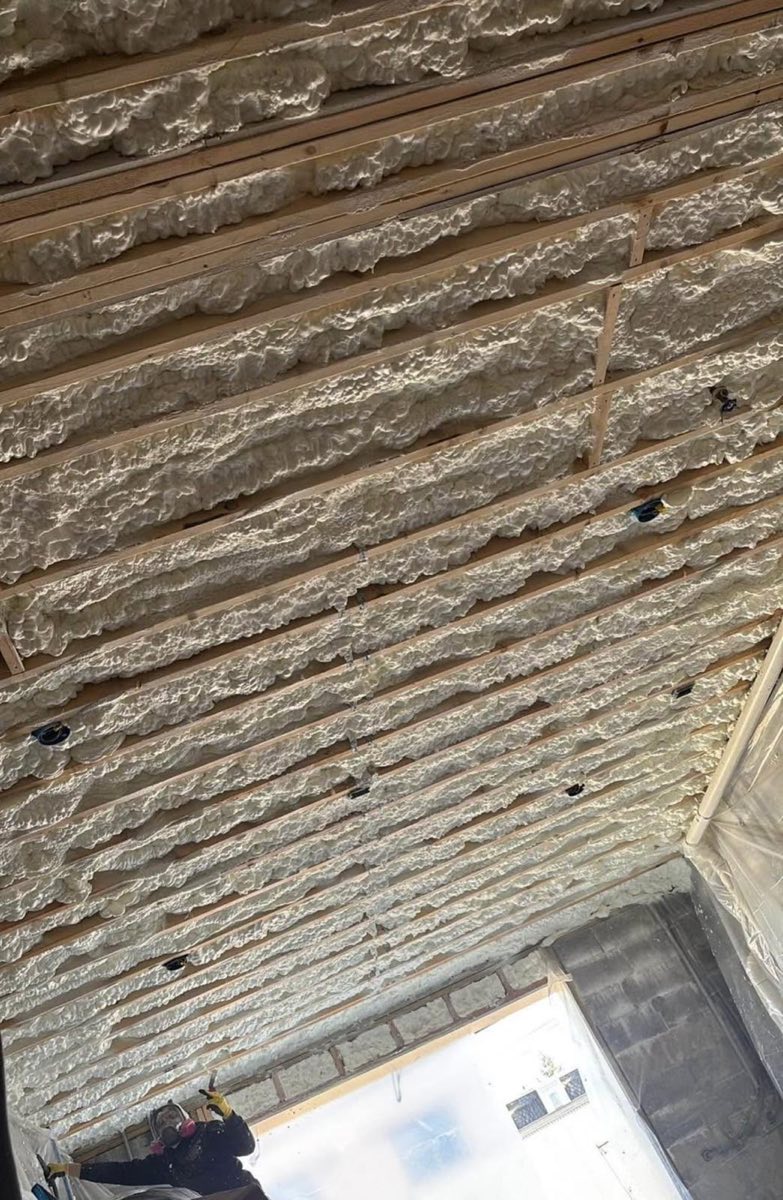
Spray foam applied to a vaulted rotunda ceiling from scaffolding
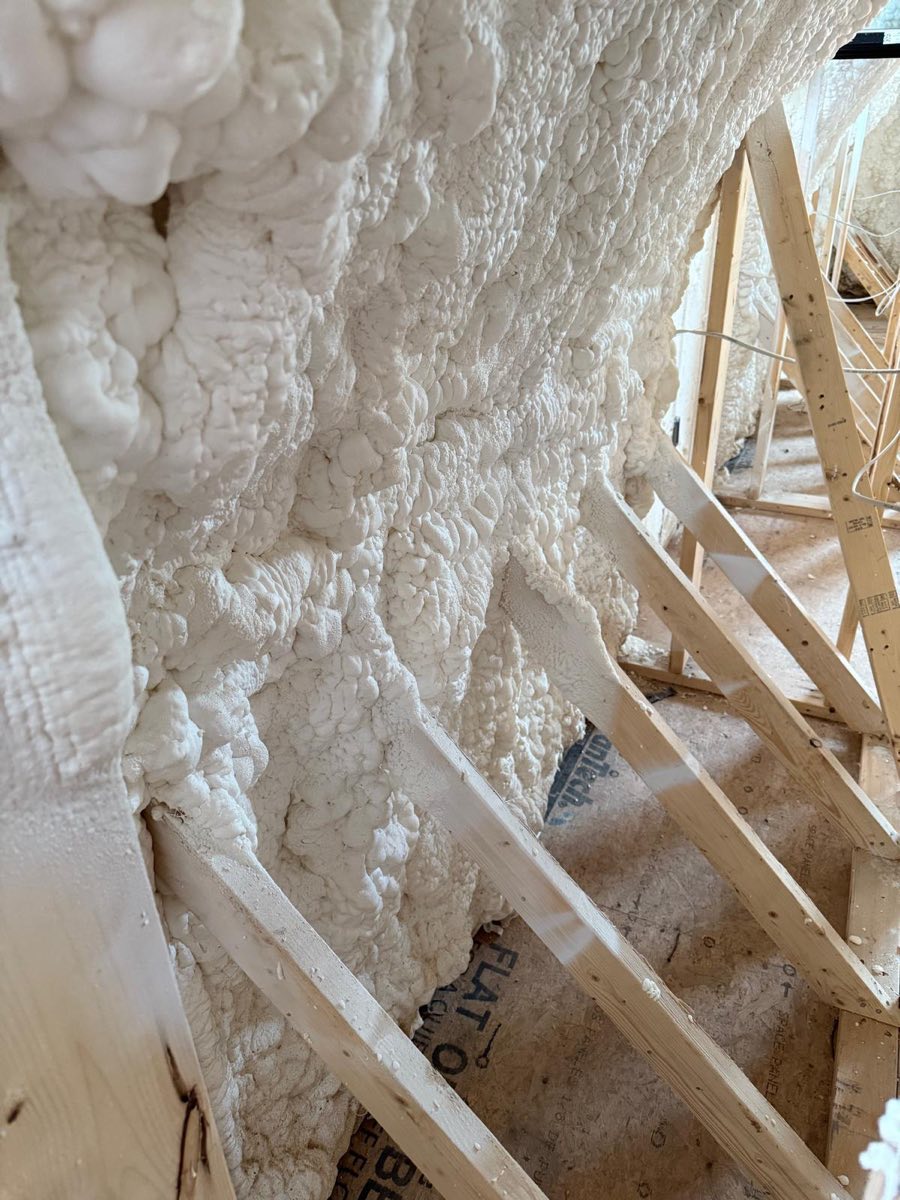
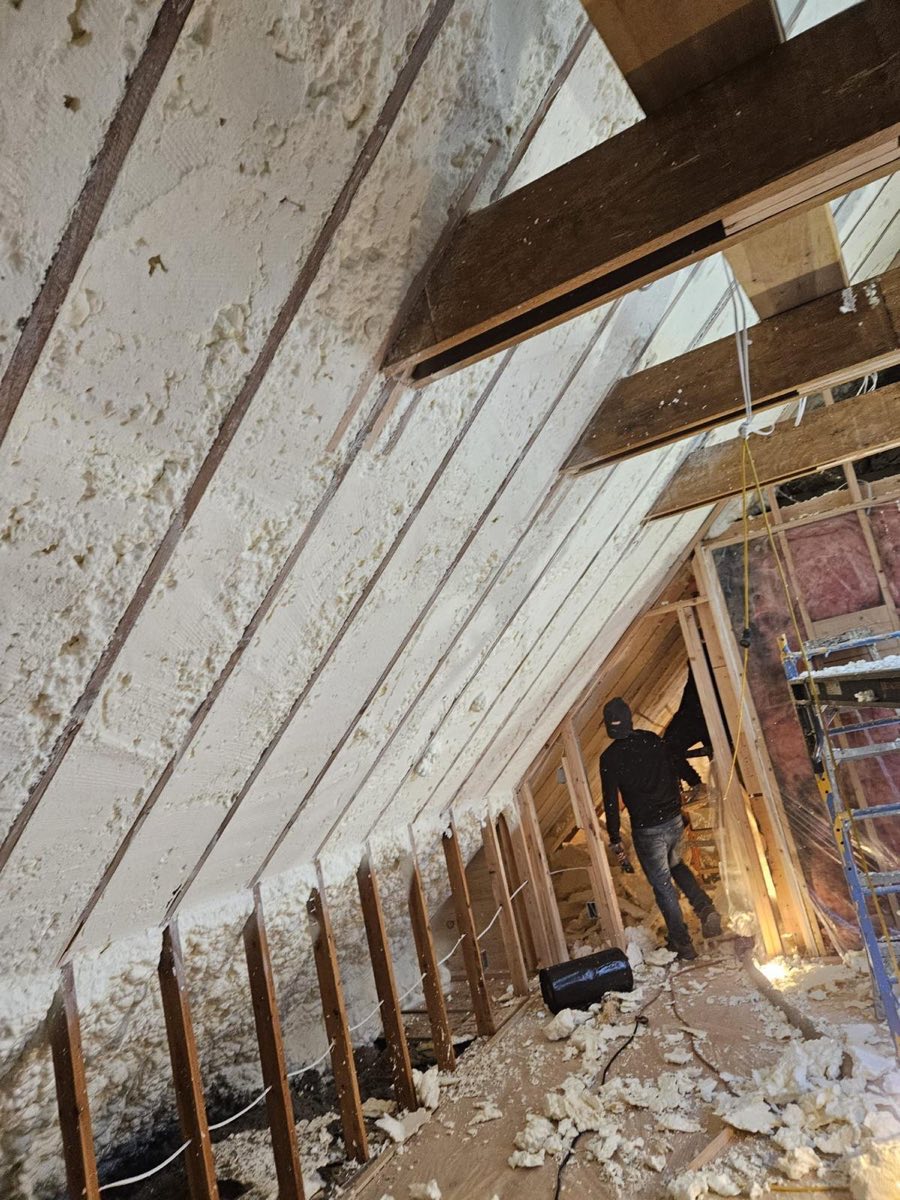
Close-up of open-cell spray foam applied to an attic roof deck
Our crew spraying foam along an attic roofline after removing old fiberglass
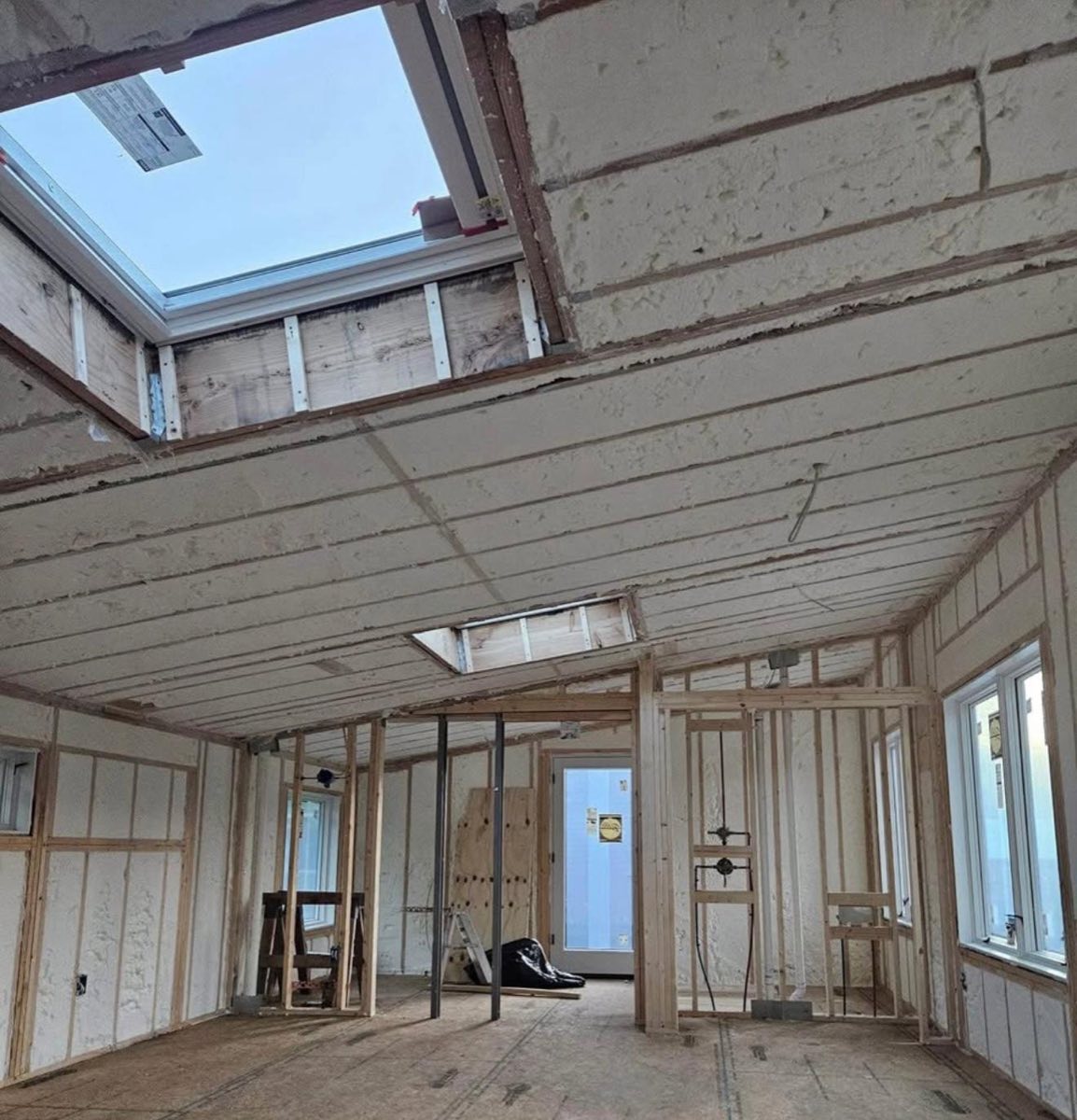
Spray foam insulation around a skylight and sloped dormer ceiling
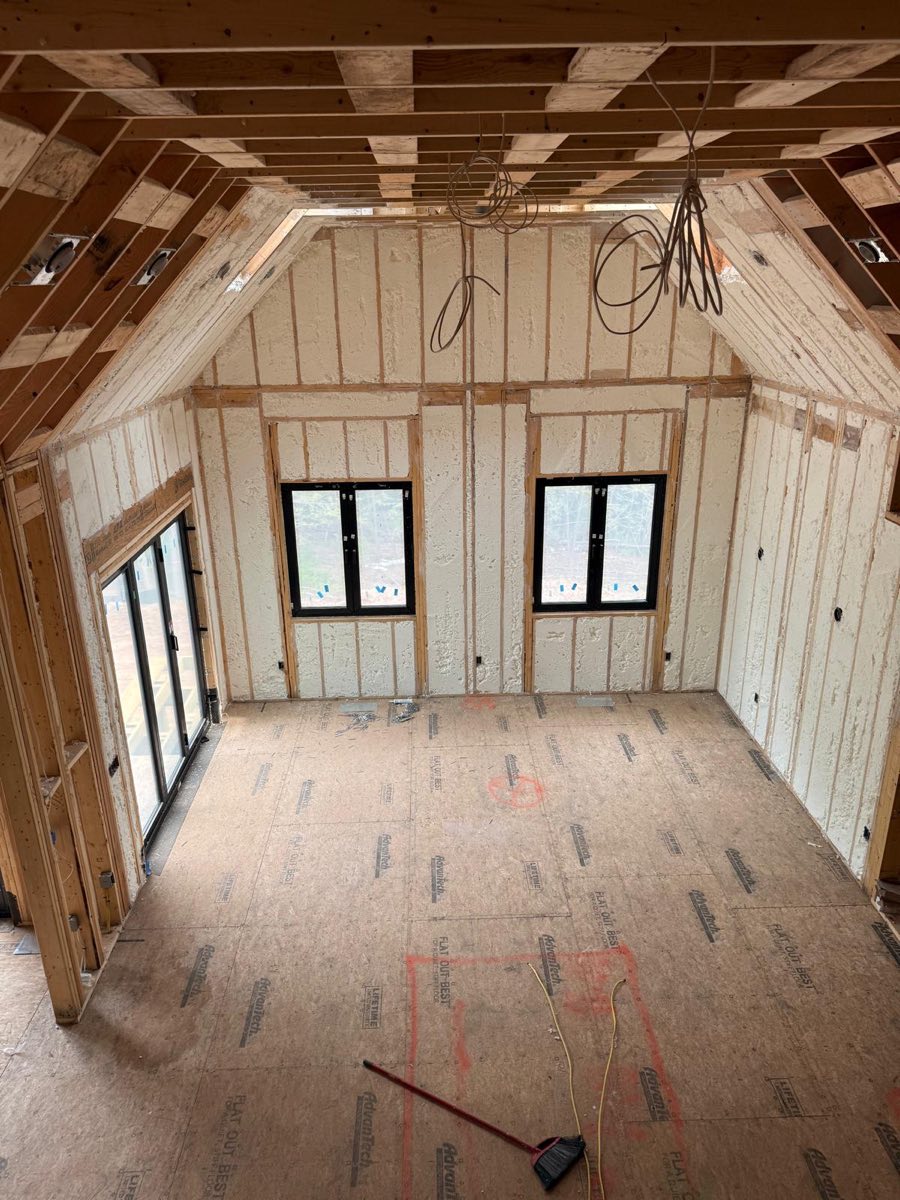
Spray foam on the gable wall and ceiling of an upstairs bedroom
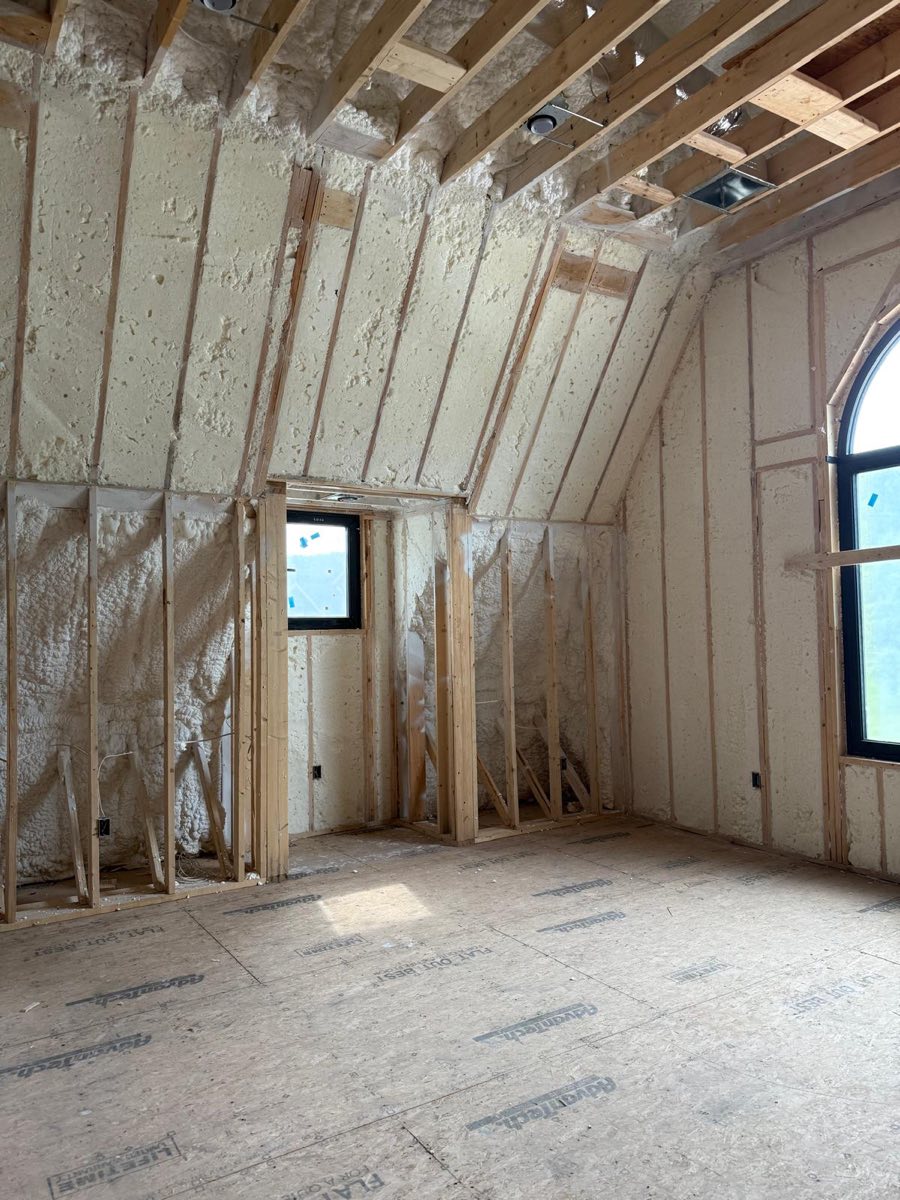
Foam-insulated knee walls and sloped ceiling in a second-floor room
Spray-foamed ceiling around two skylights in an open-plan room
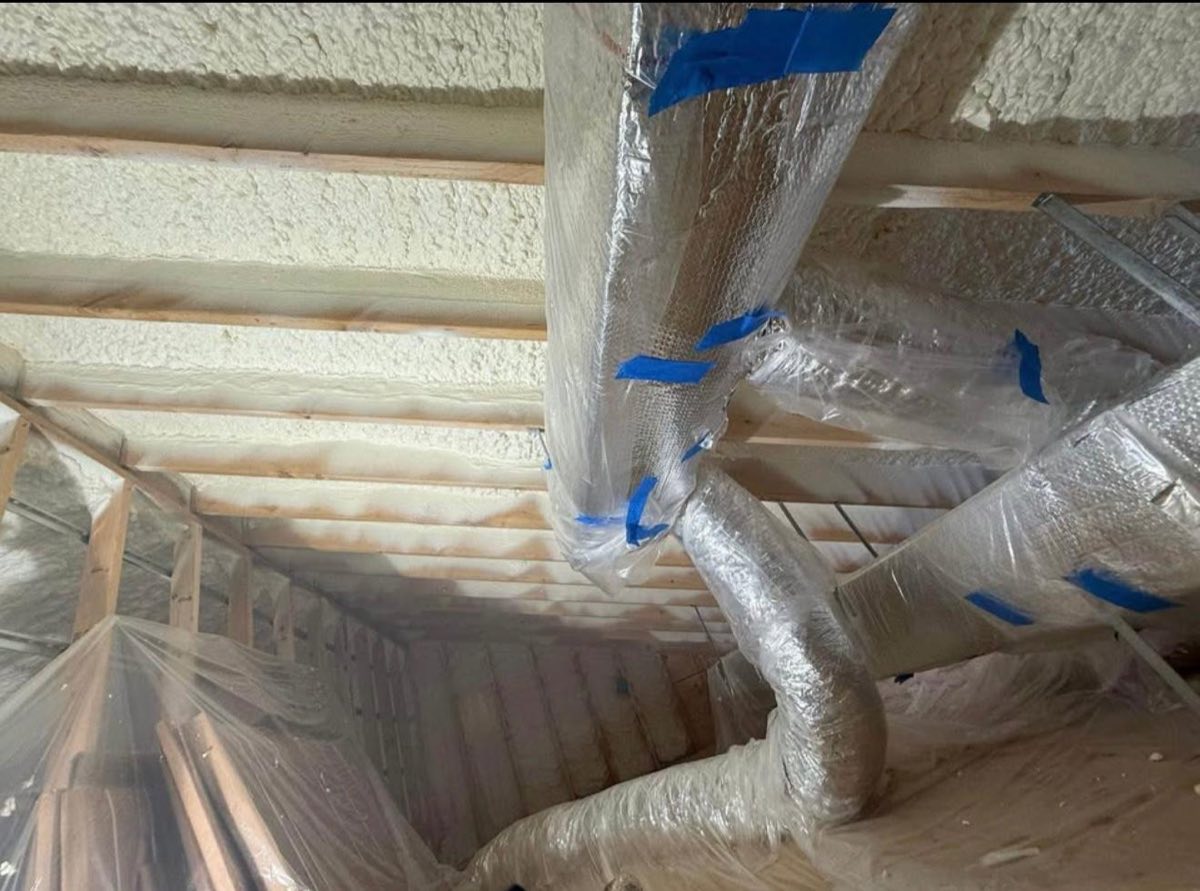
Ductwork wrapped and taped off before spray foam is applied in an attic
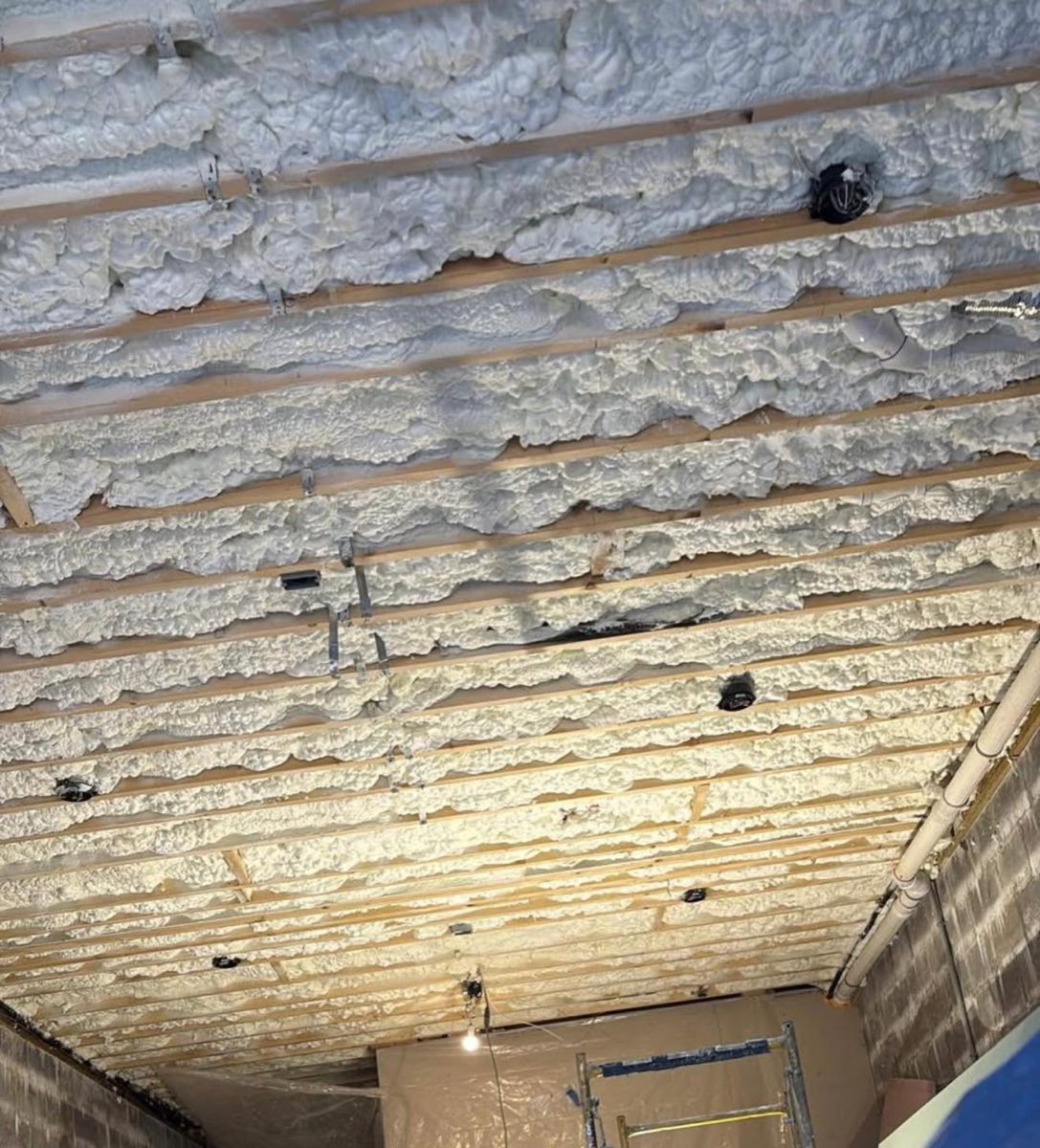
Spray foam applied between the floor joists above a basement
Spray foam sealing basement ceiling joists to stop heat loss through the floor
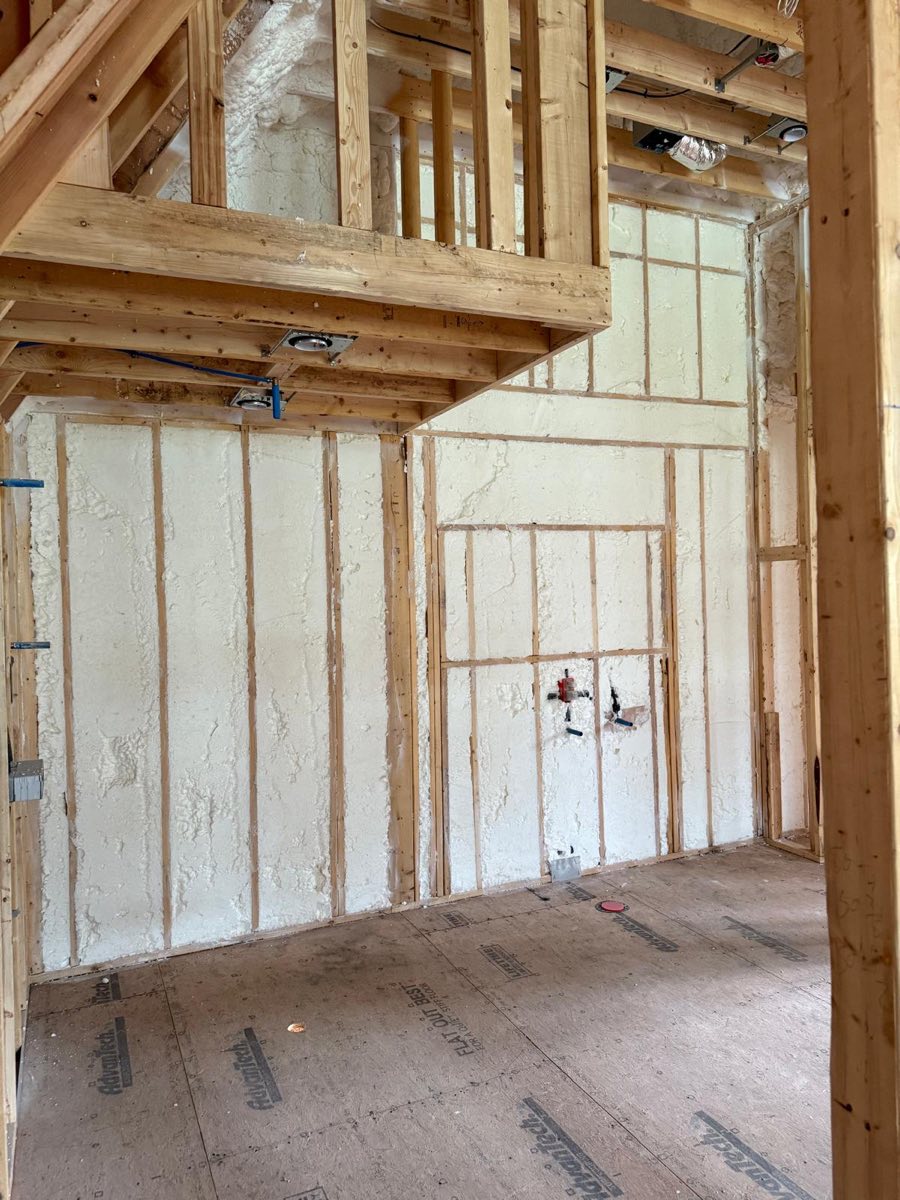
Spray foam filling interior wall cavities around a plumbing rough-in
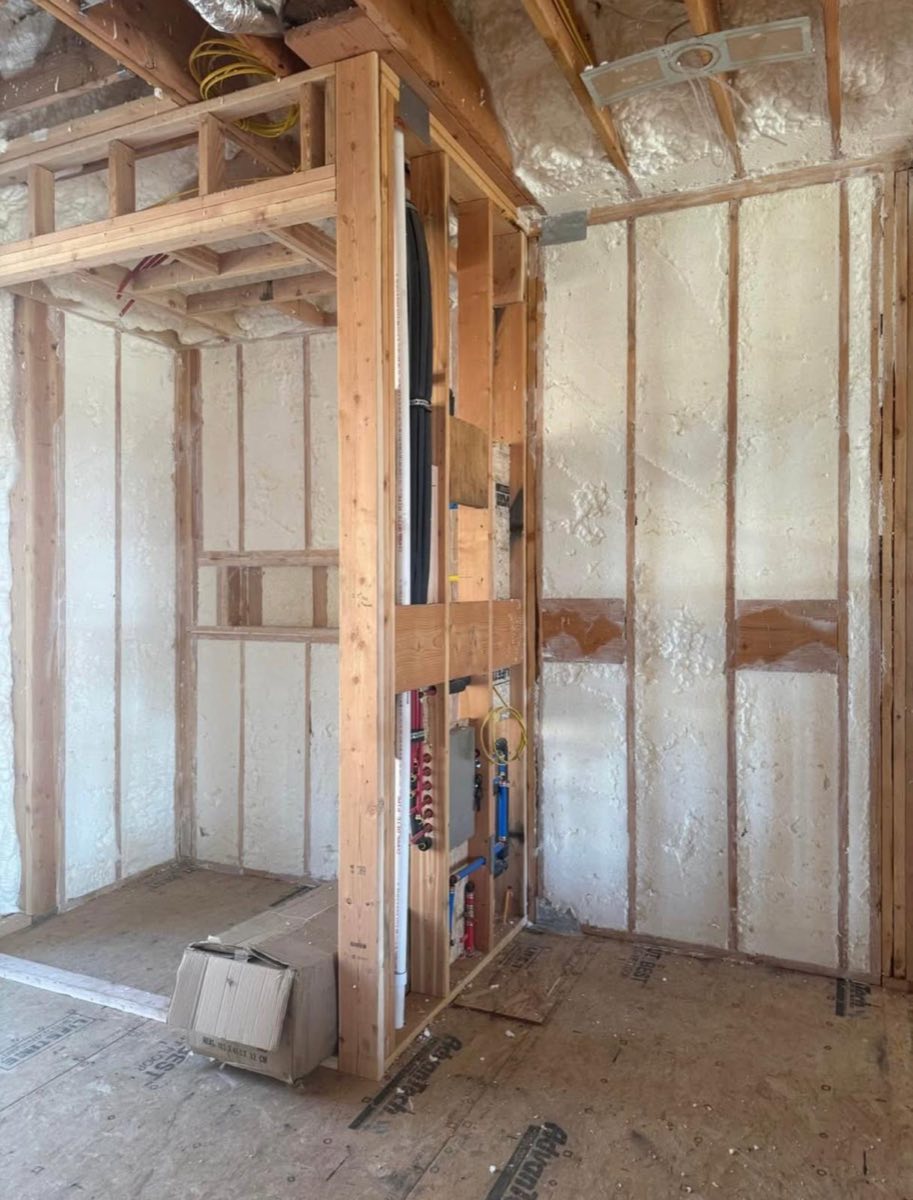
Spray-foamed walls around a plumbing manifold in a new build
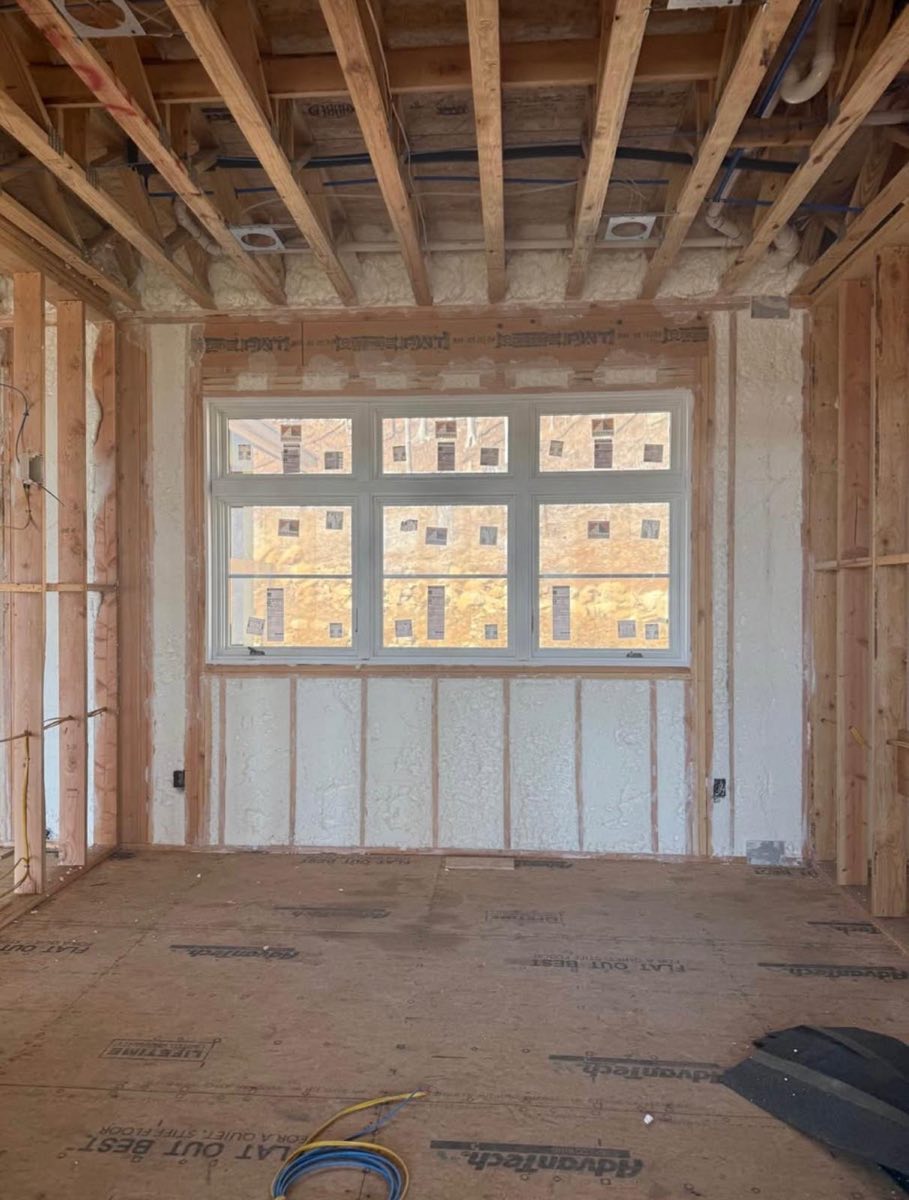
Spray foam insulation packed tight around a bay window opening
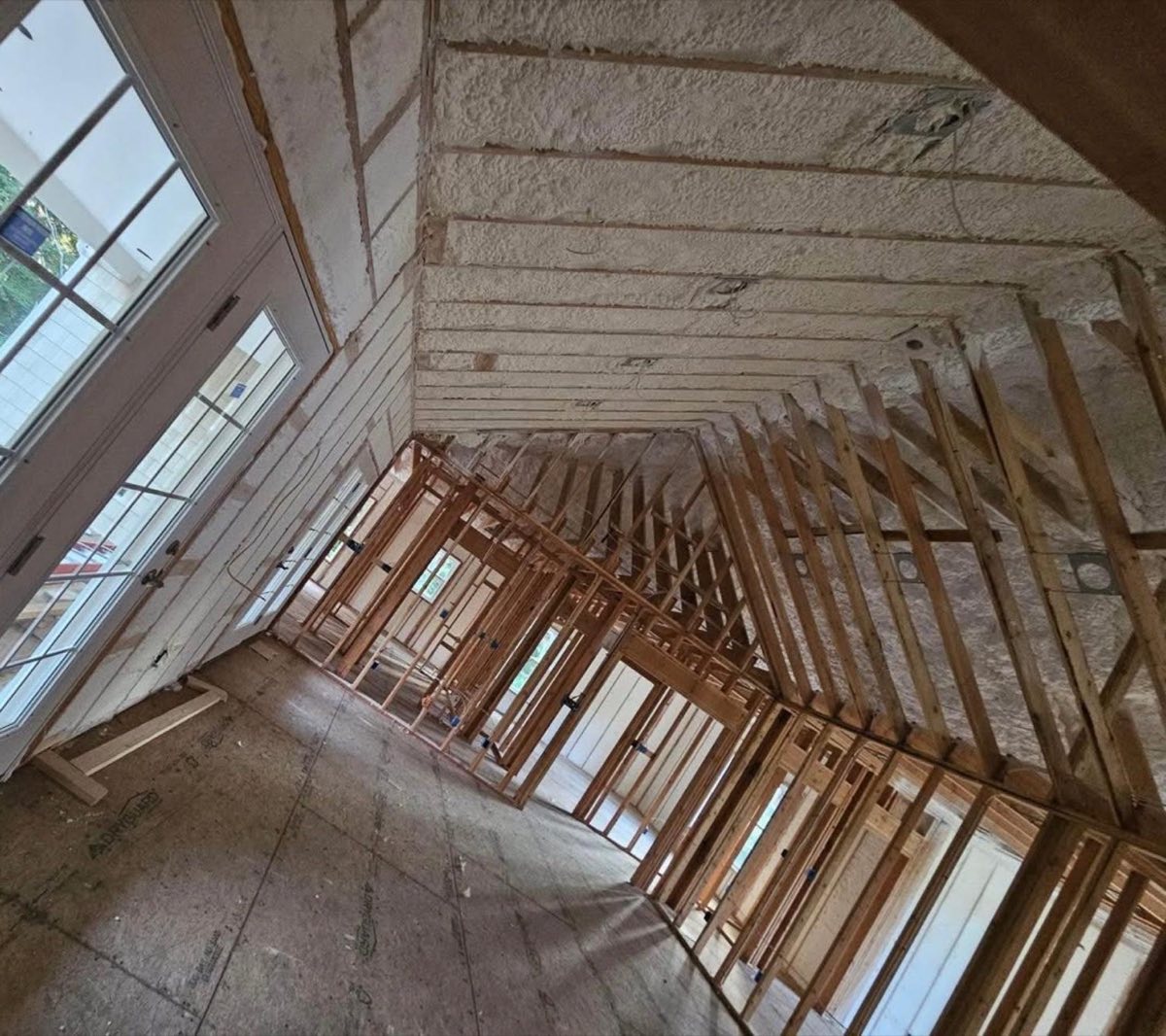
Spray foam on the rafters and gable walls of a converted attic room
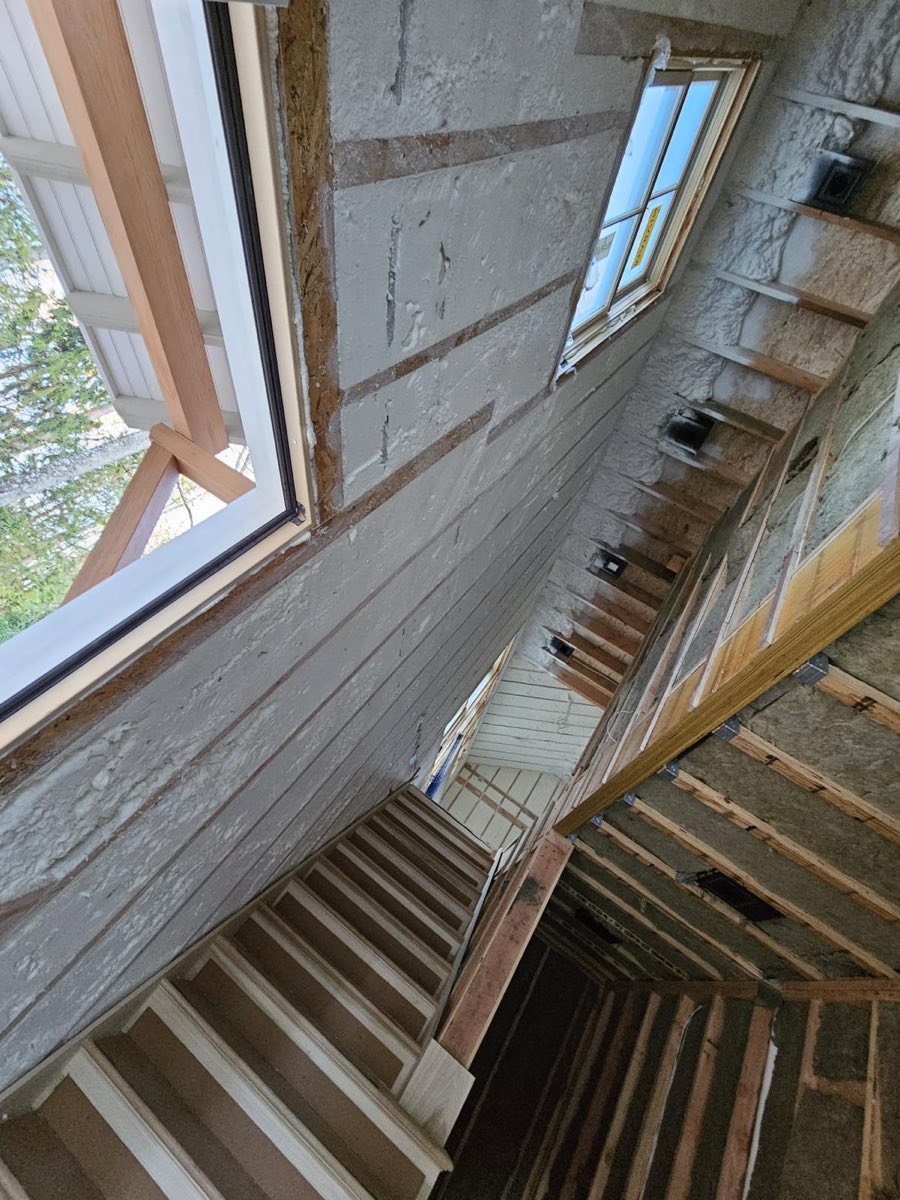
Foam-insulated stairwell walls and roofline in a house under construction
Spray-foamed exterior walls seen across open roof framing
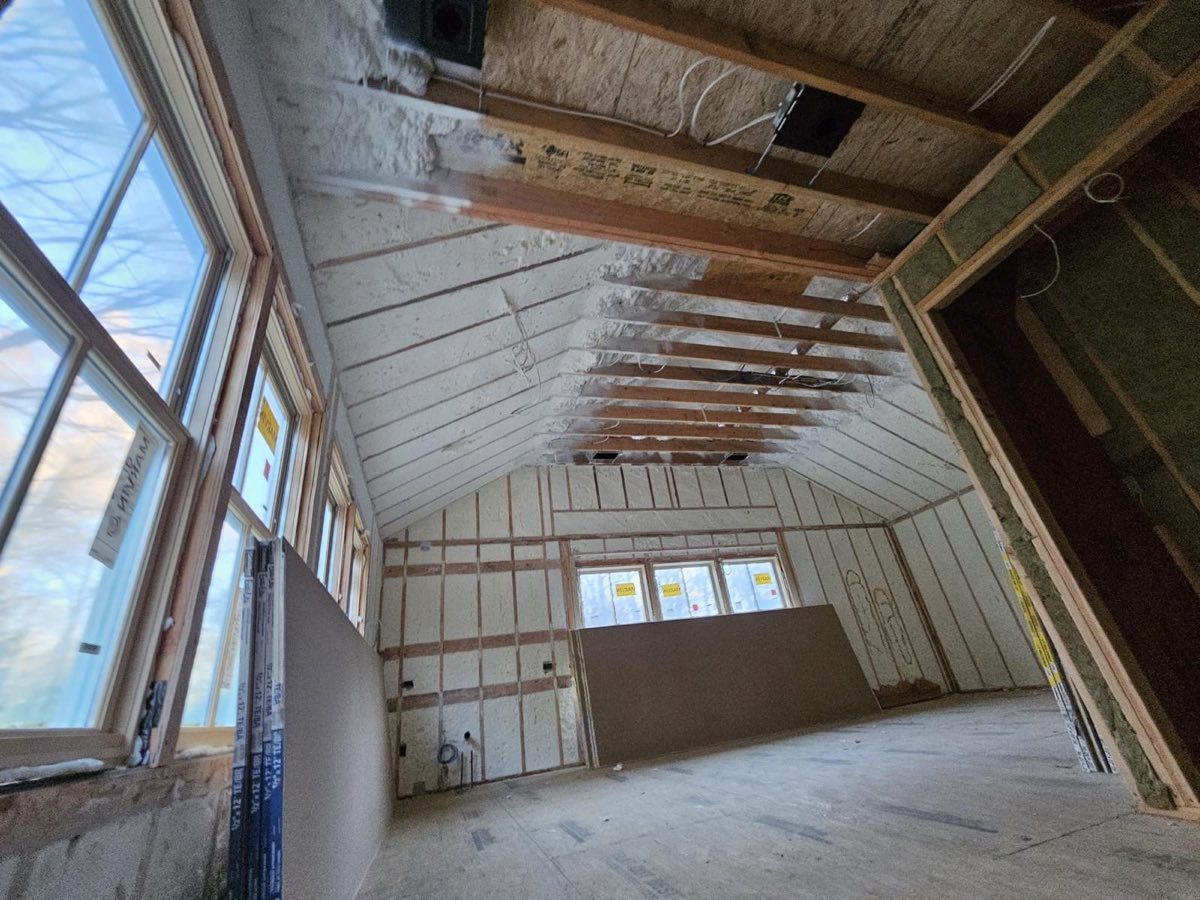
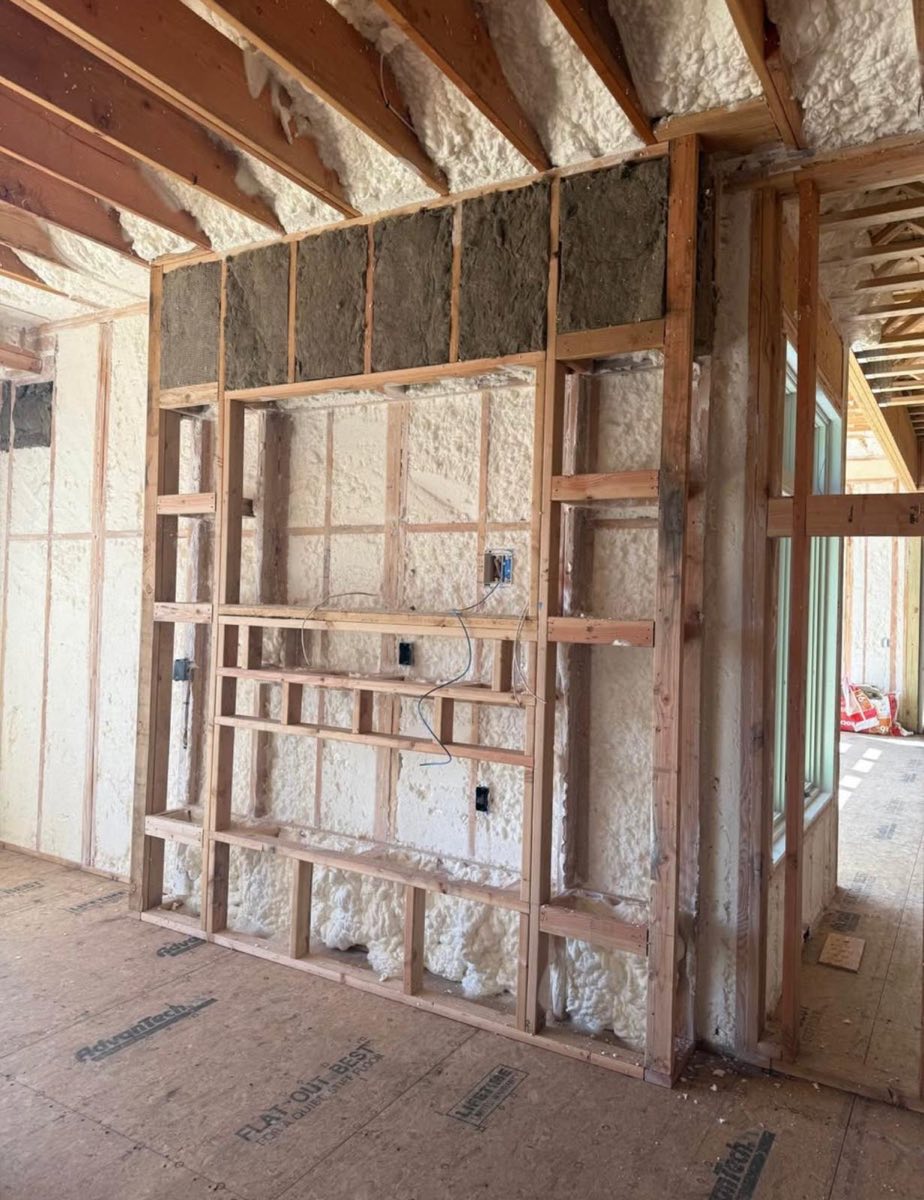
Spray foam and mineral wool combined in one wall assembly
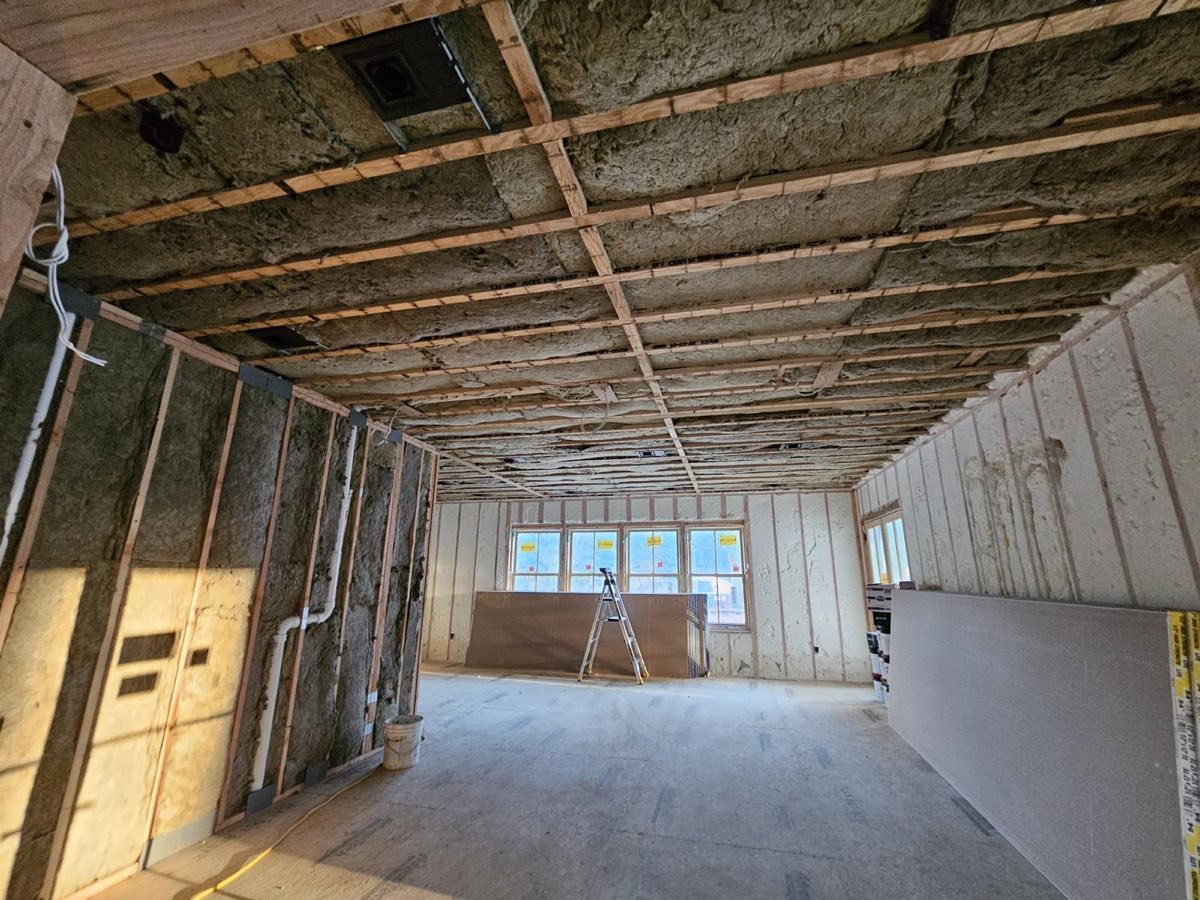
Mineral wool batts fitted between ceiling joists and wall studs
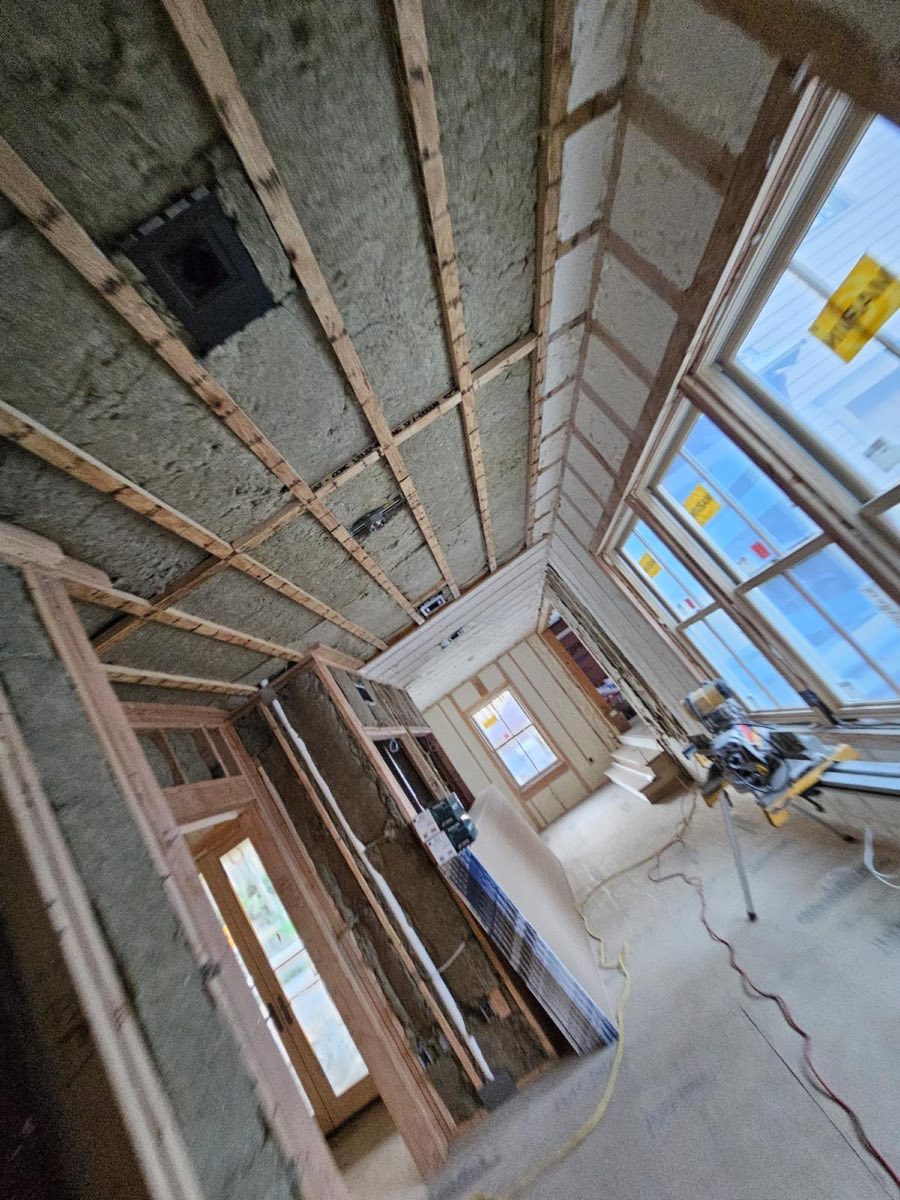
Mineral wool batt insulation across a ceiling and side walls
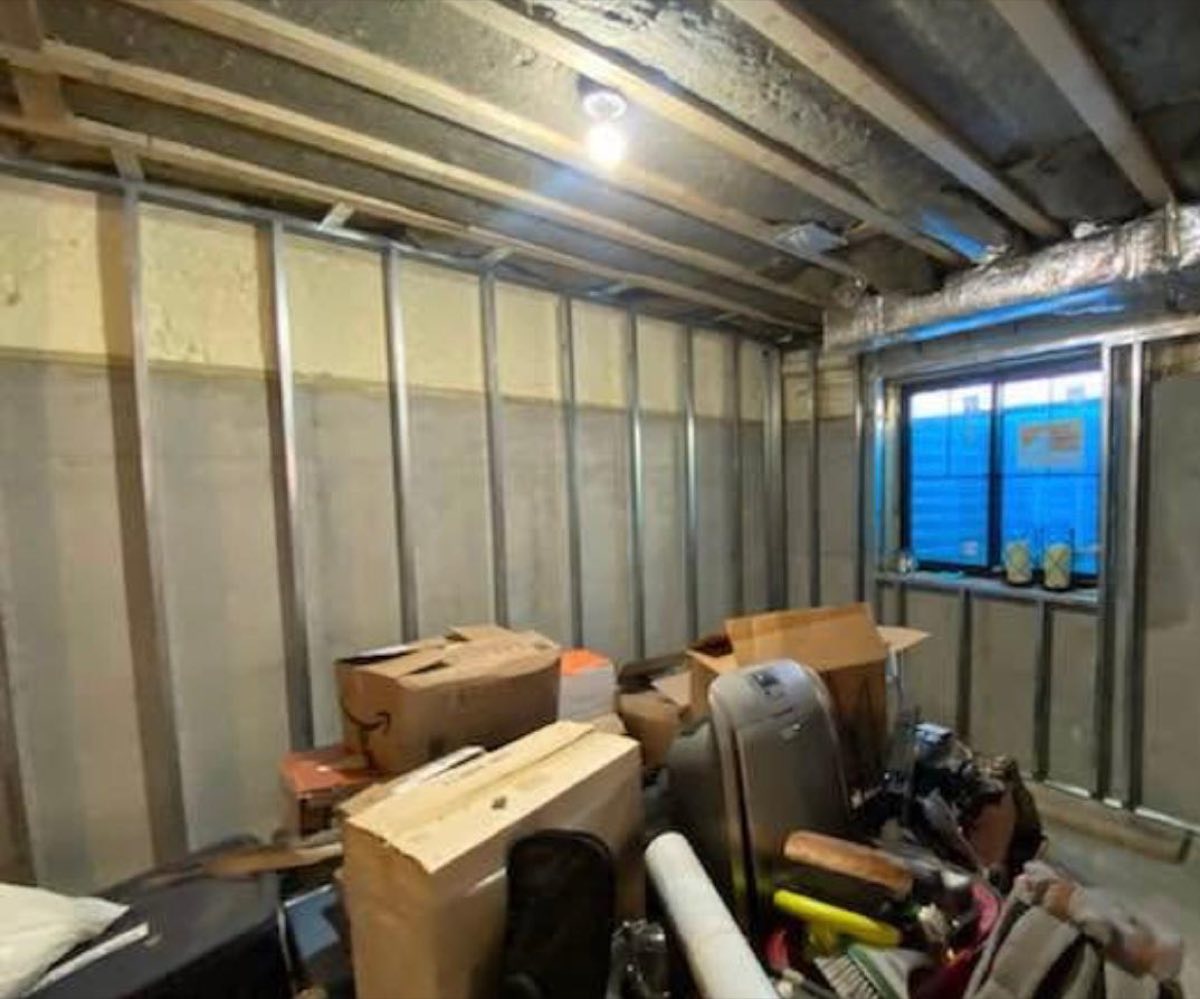
Insulated basement wall behind steel stud framing

What you are looking at in these photos

The thick, cream-coloured material sprayed between studs and rafters is spray polyurethane foam. It goes on as a liquid and expands in seconds to fill the cavity completely, which is why it insulates and air-seals in a single step. Closed-cell foam runs about R-6 to R-7 per inch — we rate ours at roughly R-6.88 — and doubles as an air and vapour barrier. Open-cell foam is about R-3.5 to R-3.8 per inch, softer and more breathable, and still a strong air barrier.

The dense grey-green batts are mineral wool. We use it where a job needs fire resistance or sound-deadening between rooms, and in assemblies where a breathable material is the better choice.

The silver, taped-off tubes are ducts. They are wrapped and protected before spraying so foam never bonds to them. In a sealed attic, bringing the ductwork inside the insulated envelope is often the single biggest comfort gain in the house.

A few shots show bare framing next to finished sections. That is deliberate — it is the clearest way to see how completely foam fills a cavity compared with what was there before.

The services shown here

Free energy audit and estimate

We will walk your attic, basement and crawl space, tell you where the house is actually losing heat, and price the work. No charge and no obligation. Call 914-825-6824 or send us a message.