Insulation

Rockwool Insulation

Mineral wool—often called rock wool or by the brand name Rockwool—is one of the most durable, fire-resistant insulation materials available for a home. If you are weighing your options in Westchester, Rockland, or Bergen County, it is worth understanding exactly what this material does well and where it fits.

What Mineral Wool Insulation Is

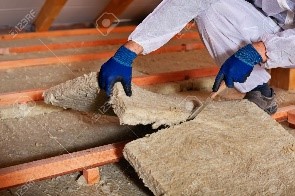
Mineral wool is made by melting natural rock (typically basalt or diabase) along with recycled steel-mill slag, then spinning the molten mixture into fine fibers—much the way cotton candy is spun. Those fibers are compressed and bound into dense, semi-rigid batts, or produced as loose fill for blowing into cavities.

The result is a heavy, sturdy insulation that holds its shape for the life of a home. Its density is what sets it apart from lighter materials: mineral wool delivers roughly R-3 to R-4.2 per inch, comparable to fiberglass batt (about R-3 to R-4 per inch) and cellulose (about R-3.2 to R-3.8 per inch), while adding fire and sound performance those materials cannot match. For reference, closed-cell spray foam runs about R-6 to R-7 per inch and open-cell about R-3.9 to R-4.2 per inch.

How It Works in a Home

Like most insulation, mineral wool slows heat transfer by trapping still air within its fiber matrix. Because the fibers are packed tightly, it resists heat flow while also blocking airborne sound—a meaningful benefit in interior walls, between floors, and in home offices or media rooms.

Three properties make mineral wool especially reliable:

  • Non-combustible. The rock fibers do not burn and can withstand temperatures well above 1,800°F, which is why mineral wool is frequently specified around chimneys, mechanical rooms, and party walls.
  • Water-repellent. It sheds liquid water rather than absorbing it, so it does not sag, rot, or lose R-value when it gets damp, and it resists mold growth.
  • Dimensionally stable. Friction-fit batts stay put in the cavity without settling over time.

Where We Use It and the Trade-Offs

At The Home Insulators, we most often recommend mineral wool for exterior and interior walls, basement rim joists, and anywhere a homeowner wants added fire protection or quiet. It is a strong choice for shared walls in additions and for rooms near noisy mechanical equipment.

Advantages:

  • Excellent fire resistance and sound dampening
  • Moisture- and mold-resistant, with no loss of performance when damp
  • Dense and long-lasting, with no settling
  • Made largely from natural and recycled content

Considerations:

  • Higher material cost than standard fiberglass batt
  • Heavier and firmer to cut and fit, so professional installation matters
  • As a batt or loose fill, it is not an air barrier or vapor barrier on its own—unlike closed-cell spray foam, it should be paired with proper air sealing

That last point is important. Insulation only reaches its rated R-value when air leaks are addressed first, which is why we pair mineral wool with weatherization and air sealing. Depending on the assembly, rigid foam board (about R-4 to R-6.5 per inch) or spray foam may be a better fit for certain spaces, and a good contractor will tell you plainly which one your project calls for.

See Whether Mineral Wool Is Right for Your Home

The Home Insulators has been a family-owned company serving Westchester and Rockland County, NY and Bergen County, NJ since 2015. The best way to know which insulation will do the most for your comfort and your energy bills is to have your home evaluated. Call us at 914-825-6824 to schedule a free energy audit—many of our customers see savings of 20% or more on their monthly bills.

Get your free energy audit