Insulation

Attic Vents and Fans

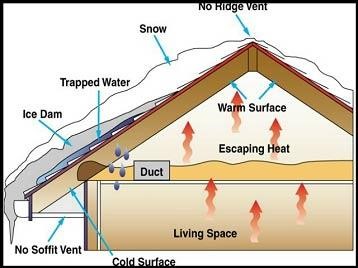
Your attic handles more heat and moisture than any other space in your home, and how you manage that airflow shapes everything from your summer cooling bills to whether ice dams form along your roof each winter. Getting attic ventilation right — or deciding your attic shouldn't be vented at all — is one of the most consequential choices a homeowner in our region can make.

What Attic Ventilation Actually Does

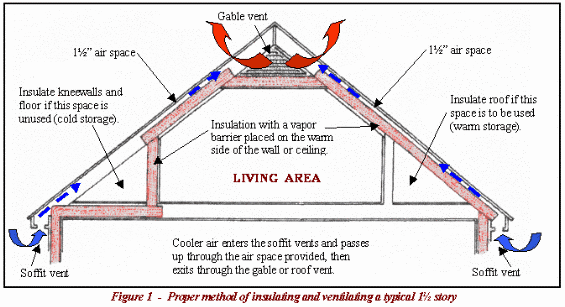
A traditional vented attic is built to stay close to the outdoor temperature and humidity rather than trapping stale air. Cool air enters low through soffit or eave vents, warms, rises, and escapes high through ridge, gable, or roof vents. In summer this steady flow carries away radiant heat before it can soak down into your living space; in winter it clears water vapor that would otherwise condense on the underside of your roof deck and feed mold or rot.

Balance is what makes it work. Building codes generally call for one square foot of net free vent area for every 300 square feet of attic floor, split roughly evenly between intake down low and exhaust up high. An attic with plenty of ridge venting but blocked soffits can't actually breathe — and may even pull air from the house instead of the outdoors.

Passive Vents vs. Powered Attic Fans

A continuous ridge vent paired with clear soffit vents is the gold standard. It has no motor, uses no electricity, and moves air through the natural stack effect and wind — quietly and for the life of the roof. Powered attic fans, whether electric or solar, promise to move more air on demand, but they come with real trade-offs.

  • The upside: a fan can lower peak attic temperature on the hottest afternoons and help clear moisture in a poorly vented attic.
  • The catch: if intake venting is undersized, a powerful fan pulls the air it needs straight from your air-conditioned living space through gaps in the ceiling — making the AC work harder, not less. In homes with gas water heaters or furnaces, that same suction can even backdraft combustion gases.

Because of this, we treat powered fans as a targeted fix, not a default. In most homes, sealing the ceiling and improving passive venting delivers better comfort for less money and no ongoing energy use.

When Sealing the Attic Beats Venting It

Ventilation only removes heat and moisture that already slipped past your insulation, so the real work happens at the attic floor. We recommend the Department of Energy's target of roughly R-49 to R-60 for attics in our climate, achieved with the right material for the assembly:

  • Blown-in cellulose (about R-3.2 to R-3.8 per inch) and fiberglass batt (about R-3 to R-4 per inch) are cost-effective ways to reach depth on an open attic floor.
  • Closed-cell spray foam (about R-6 to R-7 per inch) doubles as an air and vapor barrier where space is tight.

Some homes are better served by skipping ventilation entirely. When ductwork and HVAC equipment live in the attic, sealing the underside of the roof deck with spray foam — closed-cell at R-6 to R-7 per inch, or open-cell at R-3.9 to R-4.2 per inch — turns the attic into a conditioned, unvented space. That keeps your equipment inside the thermal envelope and eliminates the vents that ice dams and wind-driven rain exploit. It's a bigger investment, but for the right house it's the most effective option available.

Not sure whether your attic should breathe or be sealed? That's exactly what a free energy audit answers. We'll inspect your ventilation, insulation levels, and air leaks, then give you a straight recommendation with no pressure. Call The Home Insulators at 914-825-6824 to schedule yours, and start putting that 20%-plus in monthly savings back in your pocket.

Get your free energy audit