
Insulation Guide

Installing Insulation on the Floor above a Crawl Space
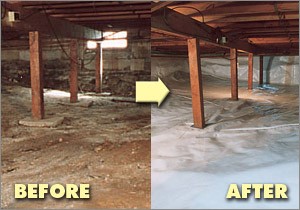
If the floors in your home feel cold underfoot every winter, the crawl space below is usually the culprit. Insulating the floor above a crawl space is one of the most cost-effective ways to make a home warmer, quieter, and cheaper to heat.

Why Crawl Space Floors Lose So Much Heat

A vented crawl space sits at close to the outdoor temperature for much of the year. Without insulation between that space and your living area, the only thing separating your feet from cold air is a thin subfloor. Heat naturally flows from warm to cold, so your heating system runs longer to replace what escapes downward, and the floor still feels chilly.

There are two proven approaches. You can insulate at the floor itself, inside the joist bays beneath your subfloor, while keeping the crawl space vented. Or you can seal and insulate the crawl space walls so the space becomes part of your home's conditioned envelope. The right choice depends on moisture conditions, whether ductwork runs below the floor, and how the crawl space was built. A proper assessment answers that before any material goes in.

Choosing the Right Insulation

Each material carries a different R-value per inch, the measure of resistance to heat flow. For floors above a crawl space, the common options are:

  • Closed-cell spray foam (about R-6 to R-7 per inch): the highest performer per inch, and it doubles as an air barrier and vapor retarder. Sprayed to the underside of the subfloor, it seals gaps and resists moisture, which makes it well suited to damp or hard-to-reach crawl spaces.
  • Open-cell spray foam (about R-3.9 to R-4.2 per inch): a softer, air-sealing foam for drier applications where vapor permeability is acceptable.
  • Fiberglass batt (about R-3 to R-4 per inch): an economical choice, but it only performs when held in full contact with the subfloor with no gaps or sagging, and it does nothing to stop air movement on its own.
  • Mineral wool (about R-3 to R-4.2 per inch): a dense, fire-resistant, and moisture-tolerant batt.
  • Cellulose (about R-3.2 to R-3.8 per inch): a dense-packed material that fills irregular cavities well.
  • Rigid foam board: most often used against crawl space walls when sealing the space rather than insulating the floor.

Air Sealing and Moisture Control Come First

Insulation slows heat transfer, but it cannot stop drafts by itself. That is the job of air sealing. The rim and band joists around the perimeter of the floor are among the leakiest spots in the whole house, and sealing them makes a noticeable difference in comfort. Moisture matters just as much: fiberglass and cellulose lose R-value and can grow mold when they get damp, so a wet crawl space must be addressed before any fluffy insulation goes in. This is where closed-cell foam, a ground vapor barrier, and proper drainage earn their keep. Getting the sequence right, dry it, seal it, then insulate it, is what separates a lasting upgrade from a repeat problem.

Since 2015, The Home Insulators has helped homeowners across Westchester and Rockland County, New York and Bergen County, New Jersey turn cold, drafty floors into warm, efficient ones, with many families seeing energy savings of 20% or more. As a family-owned company specializing in spray foam, blown-in, fiberglass batt, rigid board, and air sealing, we assess your crawl space and recommend only what your home actually needs. Call us at 914-825-6824 to schedule your free energy audit.

Get your free energy audit