
Batt Insulation
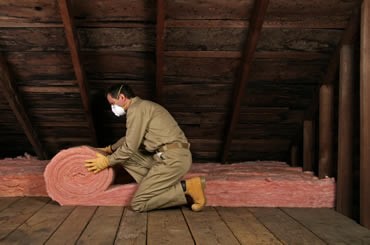
Careful Installation Needed
To maximize its efficiency Fiberglass batts must be installed to perfect accuracy. This will insure the R-Value is at the top of the range. Often times installer make errors while installing by leaving a gap around electric outlet boxes.
The popularity of Fiberglass batts has been due to its availability of thickness and width which matches different requirement really easily. It is easily obtainable and is low cost.
Other Kinds of Batts
In recent years Batts have included other types besides fiberglass. These include recycled cotton and mineral wool. Fiberglass has an R-Value of 3.8-4.0 per inch. Cotton has an R-Value of 3.7 per inch. Mineral wool on the other hand has an R-Value of 4.3 per inch.
To face Batts materials such as Kraft paper, foil-faced Kraft paper and plastic can be used. When installing the side with the face should always be on the side of the protected area, not the exterior of the house. Careful installation eliminates wasted energy by leaving gaps and voids. This is a challenge for Batt installation, because corners and crevices always come up and this reduces the overall R-Value by numbers close to 50%. Water along with compression and expansion can also reduce effectiveness and R-value. Regardless, Batts do not seal the spaces, so this must be done prior to installing. If you have existing batts, you should not worry, however, new installation can be placed over it and even around it. There is a special kind of Foam that can be injected in wall cavities show it goes around the batts and doubles as both sealant and increased R-Value. Also cellulose or Blown-IN fiberglass can be blown over the batts, but only after air-sealing.
Let the Home Insulators make an extensive evaluation to determine if batt insulation is the right choice for you and your living space. Call or Contact us by e-mail for a Free Consultation and Estimate for Insulation.