
Fiberglass Wall Insulation
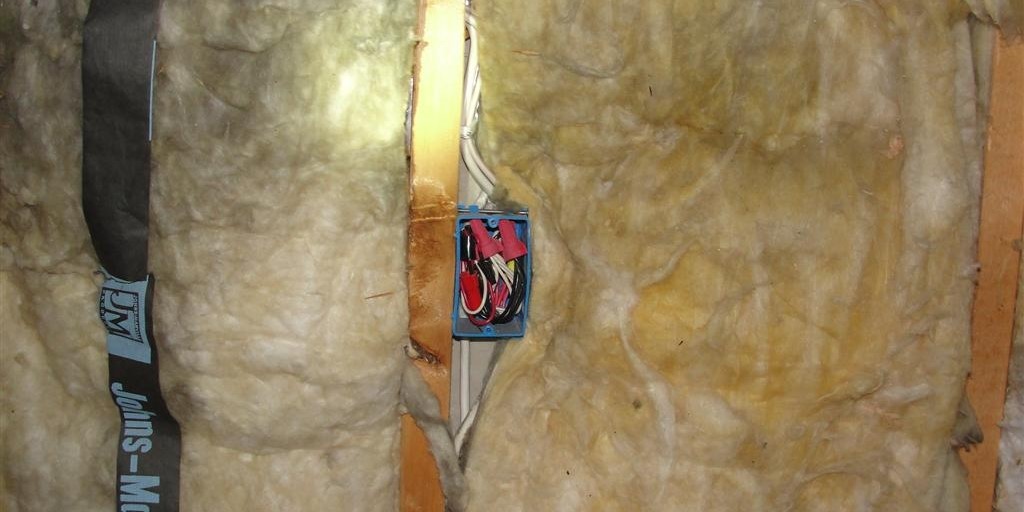
Errors in installation can cause problems with comfort and energy
The batts of fiberglass have to be placed without hero to have the best R-Value. The missing or empty space around an electrical box is a common mistake made while installing.
From the invention of the fiberglass batt, it has been the top choice for insulating wood-frame walls. Fiberglass is made in varying thickness and widths, based on the spacing between common studs, joists and rafters. It is also sold unfaced or faced with materials which include kraft paper, foil-faced kraft paper and plastic. Always orient the faced side toward the interior rather than the exterior.
The reason that fiberglass is popular is because of cost, availability and easy installation, and of course good advertising.
Fiberglass wall insulation is not always the best choice
Just because fiberglass is easy to install with simple tools does not mean that the smallest error will not sizable reduce the energy savings of your home. It is very hard to complete a job with gaps in coverage or even a very small missing area, reducing a walls R-value by over 50%
In addition Fiberglass already has a lower R-value which it loses when it is fluffed, compressed, or comes in contact with water. Basements are an even worse match for Fiberglass batts, due to moisture issues and the growth of mold. Also, very important, is the fact that Fiberglass will not seal, even when perfectly placed. To have maximum R-Value fiberglass batts have to be in a space that is still and not disturbed by air leakage.
Upgrade wall insulation with Cellulose dense-pack and injection foam
Wood-Framed walls which have no insulation or poor insulation can be improved by injection into the wall cavities in two forms. The first form is Dense-pack cellulose and the second I injection foam. Both methods have been used more and more as people begin to consider their energy bills
New cellulose or injection foam insulation are installed by first drilling access holes to give a place for injection by the crew. Usually these are between each stud, the crew pumps either foam or cellulose into each of the wall cavities, and then plug the hole when the cavity is full. Foam flows around fiberglass batts, filling the void completely and getting rid of air leakage that causes energy loss.